
Confined Space Entry Checklist
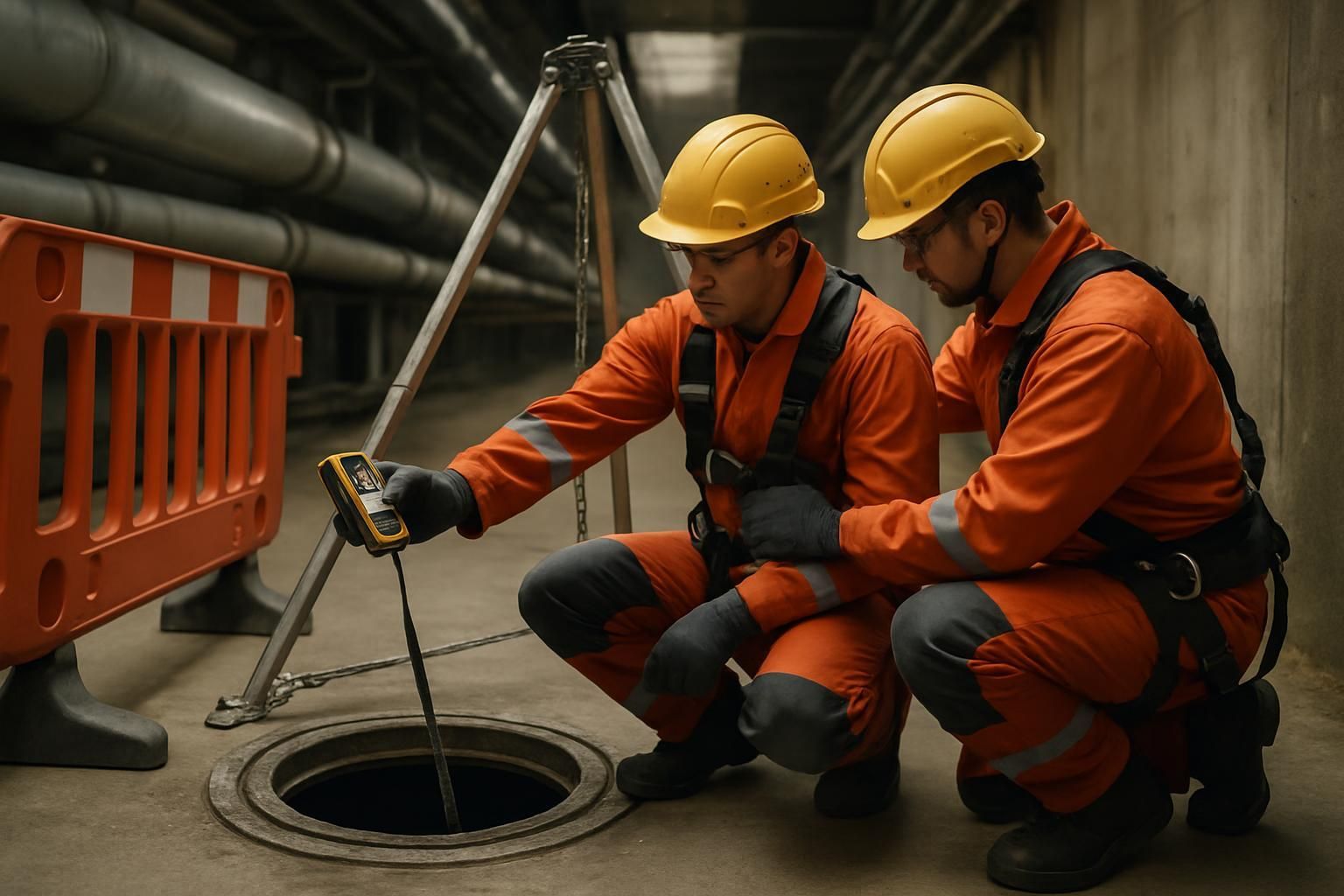
Download your confined space checklist
Please fill out the form below to access your free confined space checklist download.
About this confined space checklist
Confined space work is where guesswork turns into risk. This confined space entry checklist gives operations teams a practical, repeatable way to confirm the essentials before entry, keep control during the work, and close out safely.
It covers preparation checks, in-process checks, clear escalation criteria, and close-out actions — so the team knows what “good” looks like in every moment, not just when the paperwork is fresh.
What this confined space entry checklist covers
- Job details, scope, and risk review
- Roles, competence, and communications
- Isolation, access control, and atmospheric testing
- Equipment, PPE, and rescue readiness
- Entry and in-process checks
- Stop-work triggers and escalation routes
- Close-out, handback, and learning capture
Who it is for
This checklist is for operations teams supervising or carrying out confined space work — including site managers, shift leaders, engineers, and contractors working under your permit-to-work process.
How to use it on the frontline
- Before entry: complete the preparation sections at the entry point, not back in the office.
- During the job: use the in-process checks to keep control when conditions change.
- If anything feels off: follow the stop-work triggers. Exit, make safe, then escalate.
- After exit: close the permit (where applicable), secure the space, and capture actions so issues do not repeat.
Common stop-work triggers (do not debate them)
If any of these happen, stop work, exit the space, and escalate through your agreed route:
- Gas monitor alarm or readings outside limits
- Loss of communication with an entrant
- The attendant cannot maintain the post
- Scope change or unexpected conditions
- Ventilation failure (where required)
Why teams miss steps (and how this checklist fixes it)
Most failures in confined space entry are not caused by a lack of rules — they happen when the job gets pressured, handovers get messy, or “we always do it this way” replaces a proper check. A structured checklist removes the memory test, makes escalation normal, and creates a clear record of what was verified and when.
Want to run this checklist digitally?
Ocasta replaces paper and spreadsheets with mobile checklists that are easy to complete on site, with clear evidence capture and real-time visibility for managers. Stop guessing. Start knowing.
Disclaimer: This checklist is for general guidance only and does not constitute legal, regulatory, health and safety, or professional advice. You are responsible for ensuring compliance with applicable laws, standards, and internal policies.
Included questions
Here's what's included in this confined space checklist:
Job details and risk review (6)
Confirm the task, the space, and the controls before anyone goes near the entry point.
-
Text
Where is the confined space?
Site, area, asset ID, and exact access point.
-
Text
What work is being carried out?
Be specific: cleaning, inspection, repair, isolation, rescue drill, etc.
-
Yes/No
Is this a confined space under your local definition?
If unsure, stop and escalate — treat it as confined space until confirmed.
-
Yes/No
Is a task-specific risk assessment completed and briefed?
Everyone involved understands the hazards, controls, and stop-work triggers.
-
Dropdown
Is a confined space entry permit required?
Follow your company and site rules.
-
Yes/No
If required, is the permit issued, in date, and available at the entry point?
Check authorisation, time window, and any listed conditions.
Roles, competence, and communications (6)
Make sure the right people are in place and everyone knows who is doing what.
-
Text
Who is entering the space?
List names and roles.
-
Yes/No
Is a dedicated attendant (top person) assigned and staying outside?
No other duties. No leaving the post while entry is active.
-
Yes/No
Is a responsible supervisor identified for the entry?
The person who can stop the job and escalate.
-
Yes/No
Is competence confirmed for entrants, attendant, and supervisor?
Training, authorisation, and task familiarity are current.
-
Dropdown
How will entrants and the attendant communicate?
Pick a primary method and agree a back-up.
-
Yes/No
Are emergency contacts and escalation routes available at the point of entry?
Include site control room, rescue team, and emergency services procedure.
Isolation, access control, and atmosphere (9)
Control energy sources and confirm the space is safe before entry.
-
Yes/No
Are isolations required for this task (mechanical, electrical, hydraulic, pneumatic, process)?
If yes, complete and verify before entry.
-
Yes/No
Are isolations applied and verified (including lockout and tagout where required)?
Verify zero energy state and prevent re-energisation.
-
Yes/No
Is the entry point controlled to prevent unauthorised access?
Barriers, signage, and a clear exclusion zone.
-
Yes/No
Has atmospheric testing been completed before entry?
Test where people will breathe, and at different levels if relevant.
-
Percentage
Oxygen reading (%)
Record the measured value from the gas monitor.
-
Percentage
Flammable gas reading (% LEL)
Record the measured value from the gas monitor.
-
Dropdown
Any toxic gases detected or expected for this space?
Use your site-specific limits and permit conditions.
-
Yes/No
Is continuous gas monitoring in place during entry (where required)?
Confirm alarms are audible/visible and understood.
-
Dropdown
What ventilation is being used?
Confirm it is set up safely and will run for the full duration.
Equipment, PPE, and rescue readiness (6)
If something goes wrong, you do not get time back. Check rescue and equipment before entry.
-
Yes/No
Is entry equipment checked and fit for purpose?
Lighting, tools, intrinsically safe kit (if required), and any lifting equipment.
-
Yes/No
Is required PPE confirmed and worn correctly?
Include gloves, eye protection, head protection, respiratory protection, and hearing protection as applicable.
-
Dropdown
Are harness and lifeline required for this entry?
Follow the permit and risk assessment.
-
Yes/No
Is a rescue plan in place and understood by everyone involved?
Include how to raise the alarm, who responds, and how the casualty will be recovered.
-
Yes/No
Is rescue equipment ready at the entry point?
Tripod/winch, retrieval lines, first aid kit, and any site-specific rescue equipment.
-
Dropdown
Is the rescue capability available within the required response time?
Do not rely on emergency services as the primary rescue plan unless your policy allows it.
Entry and in-process checks (7)
Keep control while the work is happening — this is where standards slip under pressure.
-
Yes/No
Has a pre-entry brief (toolbox talk) been completed at the entry point?
Cover hazards, controls, comms, rescue plan, and stop-work triggers.
-
Yes/No
Is an entry log in use (who is in, who is out, and times)?
The attendant maintains this throughout the job.
-
Yes/No
Has the attendant remained in position throughout entry?
If the attendant must leave, everyone exits first.
-
Yes/No
Are gas monitor readings stable and within limits during the work?
If alarms sound or readings drift, stop work and exit.
-
Yes/No
Is ventilation running as planned (if required)?
Confirm power supply, ducting position, and no kinks/obstructions.
-
Dropdown
Have conditions changed since the permit/risk assessment?
Examples: new substances, weather, nearby work, unexpected residue, or equipment failure.
-
Yes/No
If conditions changed, was work paused and the plan updated before continuing?
Update permit, controls, and brief the team again.
Escalation and stop-work criteria (7)
Clear triggers reduce hesitation. If any trigger is met, stop work, exit, and escalate.
-
Yes/No
Does everyone understand the stop-work triggers for this entry?
No blame. Fast decisions prevent serious harm.
-
Yes/No
Stop-work trigger: gas monitor alarm or readings outside limits
If yes, entry must stop and everyone exits immediately.
-
Yes/No
Stop-work trigger: communication lost with entrant
If yes, stop work and initiate your response plan.
-
Yes/No
Stop-work trigger: attendant cannot maintain the post
If yes, everyone exits before the attendant leaves.
-
Yes/No
Stop-work trigger: unplanned work or scope change
If yes, stop and re-assess before continuing.
-
Dropdown
If escalation was needed, who was contacted?
Record the highest level reached.
-
Text
Escalation notes
What happened, what action was taken, and what is needed next.
Close-out and handover (8)
Finish cleanly: confirm everyone is out, controls are removed safely, and learnings are captured.
-
Yes/No
Are all personnel out of the confined space and accounted for?
Cross-check against the entry log.
-
Yes/No
Are all tools, waste, and materials removed from the space?
Leave nothing behind that could create a hazard later.
-
Yes/No
Is the space secured after work (covers, hatches, barriers, signage)?
Prevent unauthorised entry after the job.
-
Yes/No
Are isolations removed only after authorisation and final checks?
Follow your lock removal and handback process.
-
Dropdown
Permit status
Close the permit and file it as required.
-
Yes/No
Were issues, near misses, or improvement actions logged?
Capture what to fix, who owns it, and by when.
-
Text
Close-out notes
Anything the next shift or manager needs to know.
-
Signature
Supervisor sign-off
Confirm the checklist is complete and the site is left safe.