
Cleanliness Standards Checklist
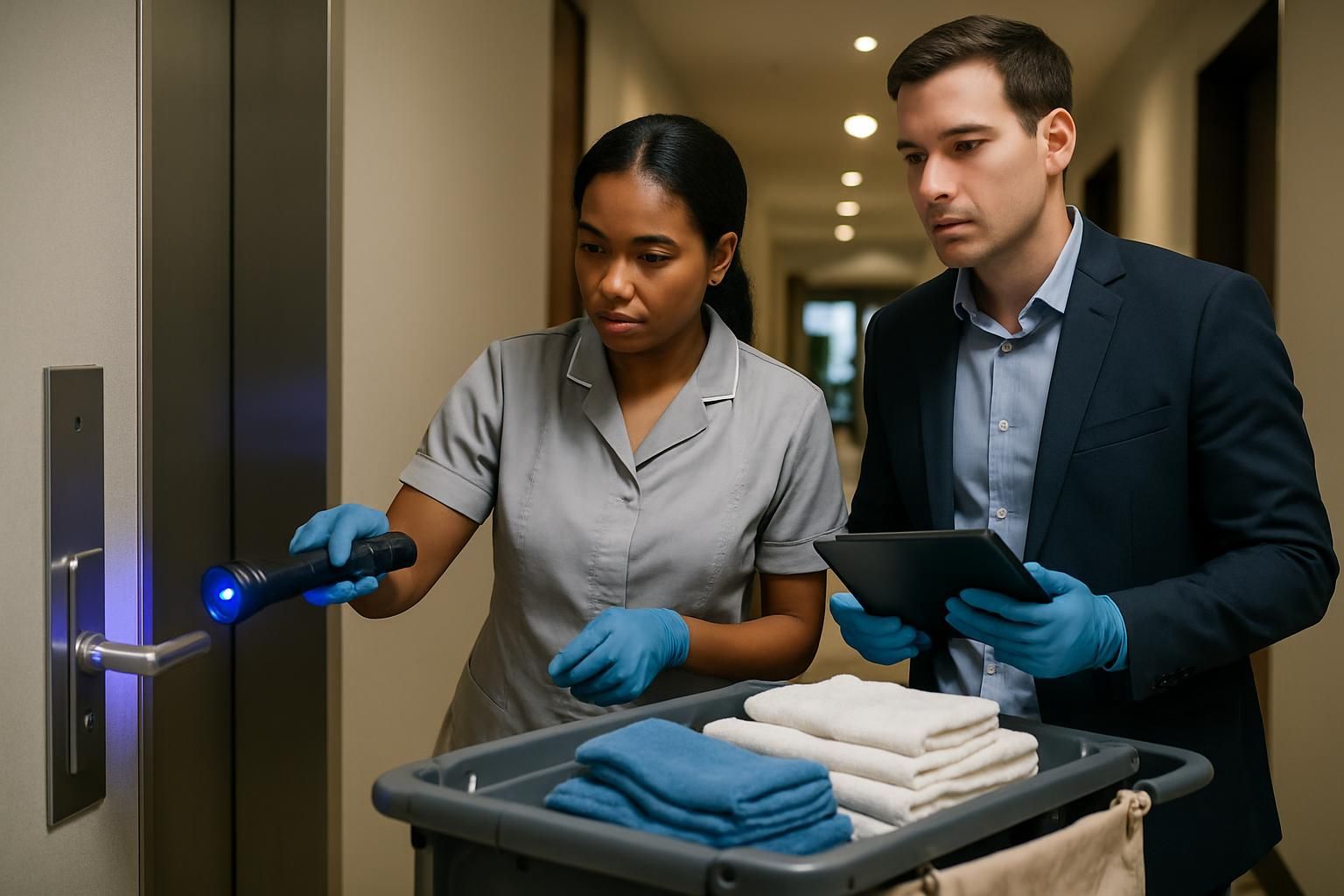
Download your cleanliness checklist
Please fill out the form below to access your free cleanliness checklist download.
About this cleanliness checklist
Cleanliness slips when teams are busy, short-staffed, or relying on memory. This cleanliness standards checklist gives Operations Teams a simple, repeatable way to check the basics, spot issues early, and escalate the ones that will not be fixed by another quick wipe.
Use it for daily routines, peak-period top-ups, and shift handovers. The goal is straightforward: stop guessing. Start knowing what is clean, what is not, and what needs action.
What this cleanliness standards checklist covers
- Preparation checks (PPE, products, dilution, signage, colour-coding)
- Front of house standards (floors, touchpoints, bins, glass, odour)
- Back of house standards (worktops, equipment, storage, waste areas)
- Toilets and washrooms (stock, hygiene, odour, floors)
- In-process checks during the shift (so standards do not slide at peak)
- Escalation criteria (pests, bodily fluids, leaks, supply shortages)
- Close-out actions (reset, storage, handover notes, sign-off)
How to use it on shift
1) Start with preparation. If the kit is incomplete or chemicals are not right, the rest of the shift becomes reactive.
2) Work front to back. Customer areas first, then back of house, then toilets. This keeps the most visible standards consistent.
3) Recheck during peak. High-touch points, bins, and toilets need a rhythm. Agree a frequency that matches footfall and stick to it.
4) Escalate causes, not symptoms. If an odour keeps returning, a drain issue will not be solved by more air freshener. Log it and escalate it.
Escalation criteria (do not wait)
Escalate immediately if you find any of the following:
- Pest activity (droppings, sightings, gnaw marks)
- Bodily fluids (follow the biohazard process and restrict access)
- Leaks, plumbing or drain issues affecting hygiene or odour
- Missing essentials (soap, paper towels, sanitiser, bin liners)
What good looks like (so it is measurable)
Cleanliness is not just “looks fine”. It is:
- Visible standard: no smears, residue, build-up, or overflow
- Safety standard: floors dry, hazards controlled, signage used
- Hygiene standard: touchpoints sanitised, toilets stocked and clean
- Control standard: issues logged, causes escalated, and close-out signed off
Turn checks into action with Ocasta
If you are still managing cleanliness with paper, photos in WhatsApp, or end-of-week spreadsheets, you are relying on guesswork. Ocasta replaces that with digital checklists, clear escalation, and real-time visibility across every site — so you can see patterns, fix root causes, and prove standards without chasing people.
Disclaimer: This checklist is for general guidance only and does not constitute legal, regulatory, health and safety, or professional advice. You are responsible for ensuring compliance with applicable laws, standards, and internal policies.
Included questions
Here's what's included in this cleanliness checklist:
Preparation and safety checks (6)
Get set up properly so cleaning is safe, consistent, and easy to evidence.
-
Yes/No
Correct PPE worn for the tasks today
For example: gloves, eye protection, apron. Follow local COSHH guidance.
-
Yes/No
Cleaning kit is complete and in good condition
Check cloths, mop heads, buckets, brushes, bin liners, and signage (wet floor).
-
Yes/No
Cleaning chemicals are in date and correctly labelled
No unlabelled bottles. Dilution bottles have the right label and mix date if used.
-
Yes/No
Chemical dilution is correct
Use the dosing system or measured dilution. Wrong dilution wastes product and reduces hygiene.
-
Yes/No
Colour-coding for cloths and mops is being followed
Avoid cross-contamination (for example, toilets vs food or customer areas).
-
Yes/No
Wet floor and cleaning in progress signage is available and used when needed
Put signage out before you start any floor cleaning.
Front of house cleanliness standards (7)
Customer-facing areas should look clean, smell clean, and feel cared for — with no guesswork.
-
Vibe
Entrance and immediate first impression
Look for litter, fingerprints on doors, smears on glass, and dirty mats.
-
Yes/No
Floors are clean, dry, and free from hazards
No sticky patches, debris, trailing cables, or wet areas without signage.
-
Yes/No
High-touch points are clean and sanitised
Door handles, push plates, counters, card machines, handrails, touchscreens.
-
Yes/No
Counters and surfaces are clean and free from clutter
Wipe marks, crumbs, dust, and unnecessary items removed.
-
Yes/No
Bins are not overflowing and are clean
Liners fitted correctly. No spills, odours, or residue around the bin area.
-
Yes/No
Glass, mirrors, and screens are smear-free
Check at different angles under lighting.
-
Dropdown
Odour check in customer areas
If there is an odour, identify the source and act immediately.
Back of house cleanliness standards (5)
The areas customers do not see still drive safety, efficiency, and audit outcomes.
-
Yes/No
Worktops and prep surfaces are clean and sanitised
No residue, dust, or build-up in corners and edges.
-
Yes/No
Equipment exteriors are clean and free from build-up
Handles, buttons, vents, and underneath where accessible.
-
Yes/No
Storage areas are clean and organised
No spillages, open packaging, or items stored directly on the floor where not allowed.
-
Yes/No
Waste and recycling areas are clean and controlled
Lids closed, no leaks, no pests signs, and clear separation where required.
-
Yes/No
Staff room and welfare areas are clean
Tables wiped, sinks clean, fridges checked for spills, bins emptied.
Toilets and washrooms (7)
This is where cleanliness is most noticeable — and most likely to drive complaints.
-
Yes/No
Toilets and urinals are clean and descaled where needed
No visible staining, splash marks, or odours.
-
Yes/No
Sinks and taps are clean and working
No limescale build-up, blockages, or leaks.
-
Yes/No
Soap is stocked and dispensers are clean
No empty dispensers. Wipe fingerprints and drips.
-
Yes/No
Hand drying is available and working
Paper towels stocked or hand dryers operational.
-
Yes/No
Sanitary bins are present (where required) and not overfilled
Lids close properly and area is clean.
-
Yes/No
Washroom floors are clean and dry
Pay attention behind doors and around toilets.
-
Dropdown
Odour check in washrooms
If strong odour persists after cleaning, escalate for investigation (drains, leaks, ventilation).
In-process checks during the shift (5)
Cleanliness slips during busy periods. These checks keep standards consistent without relying on memory.
-
Yes/No
Spillages are dealt with immediately and safely
Clean, dry, and sign. If the source is unknown or recurring, investigate.
-
Dropdown
High-touch points rechecked
Set a rhythm that matches footfall (for example: hourly at peak).
-
Dropdown
Bins checked and emptied as needed
Overflow creates odour, pests risk, and a poor customer impression.
-
Dropdown
Toilets rechecked during the shift
Increase frequency at peak times.
-
Yes/No
Clean-as-you-go is being followed
No build-up of waste, packaging, or dirty tools waiting for ‘later’.
Escalation criteria and actions (6)
Know when to stop guessing and escalate. Capture what happened, what you did, and what you need.
-
Yes/No
Any signs of pests (droppings, gnaw marks, sightings)
If yes: isolate affected area where possible and escalate immediately.
-
Yes/No
Any bodily fluids incident (vomit, blood, faeces)
If yes: follow the biohazard process and restrict access until fully cleaned and sanitised.
-
Yes/No
Any plumbing, drain, or leak issue affecting cleanliness
If yes: escalate for maintenance. Re-cleaning will not fix the cause.
-
Yes/No
Any shortage of essential cleaning supplies
For example: sanitiser, soap, paper towels, bin liners, mop heads.
-
Person
Escalated to
Select the manager or on-call contact you notified.
-
Text
What actions were taken
Be specific: area, time, what you cleaned, what you isolated, and what support you need.
Close-out and sign-off (6)
Finish strong: reset the site, prevent tomorrow’s problems, and leave clear evidence.
-
Yes/No
Final walkthrough completed across all areas
Front of house, back of house, toilets, waste areas.
-
Yes/No
Tools cleaned, dried, and stored correctly
Replace cloths and mop heads as required. Avoid storing damp equipment.
-
Yes/No
Waste removed and bins wiped down
No leaks or residue left behind.
-
Yes/No
Chemicals secured and stored safely
Caps on, labels visible, stored in the correct locked area where required.
-
Text
Handover notes for the next shift
Call out any recurring issues, areas to monitor, or jobs that could not be completed.
-
Signature
Signed off by
Confirms the cleanliness standards checklist is complete and accurate.