
Luxury Sales Conversation Observation
Download your sales observation
Please fill out the form below to access your free sales observation download.
About this sales observation
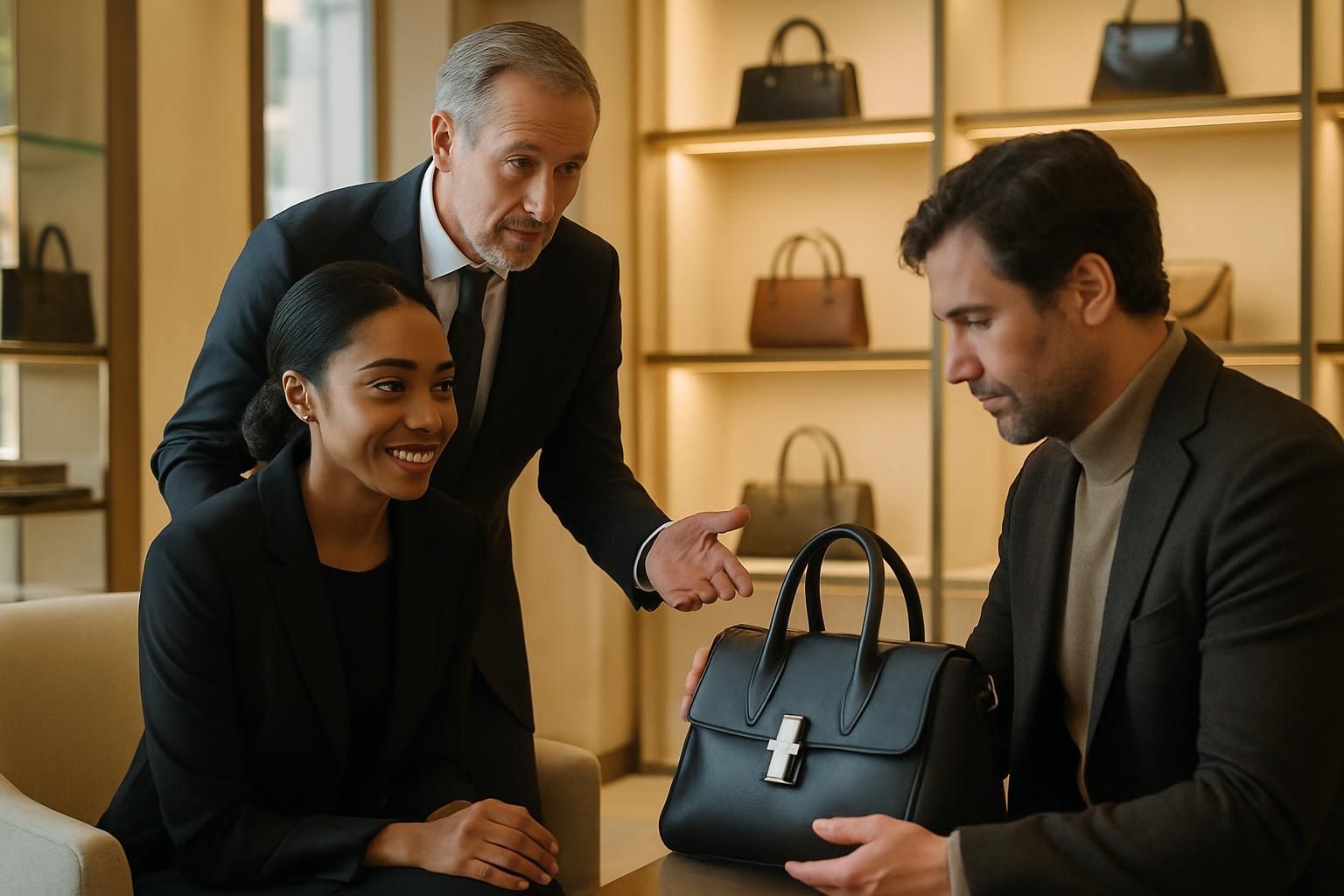
Luxury selling is rarely about saying the “right” thing. It is about noticing what matters to the client, building trust quickly, and guiding them with calm confidence. This luxury sales conversation observation gives managers a consistent lens for coaching high-value interactions — without turning great advisors into scripts.
Use it to capture what you actually saw and heard: how the advisor opened, the quality of discovery, how product storytelling landed, and whether clienteling behaviours (appointments, follow-up, consent-led data capture) were present and professional.
What this observation covers
- Opening and rapport: warm greeting, permission-based engagement, premium tone
- Discovery: occasion, needs, timeline, and budget sensitivity handled with tact
- Storytelling: craftsmanship and brand narrative linked to what the client values
- Objections: clarifying the real concern and responding without pressure or discount-first habits
- Clienteling: appointment setting, specific follow-up commitments, and consent-led capture of details and preferences
- Close: clear next steps that protect the relationship, even when there is no sale today
Who it is for
This observation works best for operations teams, store leaders, and regional managers who want consistent standards across locations while keeping the brand experience human. It is also useful for L&D teams who need evidence-based coaching themes (not opinions) to improve conversion and average transaction value.
How to use it on the floor
- Observe quietly for 5–15 minutes. Capture verbatim phrases and client reactions where possible.
- Score the moments that matter (vibe questions) and add short evidence notes. The goal is clarity, not paperwork.
- Coach straight away while the interaction is fresh. Pick one priority area and agree one change for next time.
- Follow up by checking whether the advisor completed the agreed action (for example, booked an appointment or sent a curated follow-up message).
Stop guessing. Start knowing.
Great luxury retail performance comes from repeatable behaviours — but most teams still rely on memory and gut feel when coaching. With Ocasta, observations are structured, consistent, and easy to roll up into insight across stores. You see what is working, where skills are drifting, and what to coach next.
Disclaimer: This checklist is for general guidance only and does not constitute legal, regulatory, health and safety, or professional advice. You are responsible for ensuring compliance with applicable laws, standards, and internal policies.
Included questions
Here's what's included in this sales observation:
Context and setup (5)
Capture the basics so coaching is grounded in what actually happened, not assumptions.
-
Dropdown
What type of interaction was observed?
Choose the closest match.
-
Number
Approximate interaction length (minutes)
Estimate is fine.
-
Dropdown
Client profile (best estimate)
Use observable cues and what the client shared.
-
Vibe
Advisor readiness and composure
Consider appearance, calm confidence, and control of the space.
-
Vibe
Overall premium tone felt natural (not scripted)
Did the experience feel elevated, personalised, and effortless?
Opening and rapport (6)
Observe how the advisor earns permission to engage and sets the pace without pressure.
-
Yes/No
Greeted promptly with warm, confident body language
Eye contact, smile, open posture, appropriate distance.
-
Yes/No
Used the client’s name appropriately when known
Natural use, not overused.
-
Yes/No
Opened with a permission-based question
For example: “What brings you in today?” or “May I show you something new?”
-
Vibe
Rapport built quickly and felt genuine
Small talk served the client, not the advisor.
-
Vibe
Pacing and space management supported a premium experience
No rushing, no hovering, offered seating or privacy when appropriate.
-
Text
Evidence observed in the opening
Write verbatim phrases, behaviours, and client reactions.
Discovery and needs understanding (7)
Assess the quality of discovery — not just whether questions were asked, but whether they created clarity.
-
Vibe
Discovery created a clear view of what the client valued
Style, use case, preferences, constraints, decision drivers.
-
Yes/No
Identified the occasion or purpose
For example: self-purchase, gift, event, milestone, travel, work.
-
Yes/No
Identified timeline or urgency
When do they need it? Are they comparing options today?
-
Vibe
Explored budget sensitivity with tact
No awkwardness, no assumptions, no pressure. Focused on value and priorities.
-
Yes/No
Used open questions more than closed questions
Open questions invite detail and reduce guesswork.
-
Yes/No
Showed clear active listening
Summarised, mirrored language, checked understanding, did not interrupt.
-
Text
Discovery evidence and key client quotes
What did the client say they wanted, worried about, or valued?
Storytelling and product presentation (6)
Observe how the advisor connects product features to meaning, craft, and the client’s world.
-
Yes/No
Linked product story directly to the client’s needs and occasion
Not a generic script — it matched what was discovered.
-
Vibe
Spoke about craftsmanship and details with confidence
Accurate, specific, and easy to follow.
-
Yes/No
Used sensory demonstration appropriately
Invited touch/try-on, showed details, compared options without overwhelming.
-
Vibe
Curated choices and avoided overwhelming the client
A few strong options beats a rail of maybes.
-
Vibe
Language and presence reinforced a premium brand
Calm, precise, respectful. No slang, no hard selling.
-
Text
Storytelling and presentation evidence
Note phrases used, details highlighted, and what the client responded to.
Handling objections and guiding to a decision (6)
Focus on how the advisor reduces uncertainty and protects the experience while moving things forward.
-
Dropdown
What was the main objection or hesitation?
If none, select “No objection raised”.
-
Yes/No
Acknowledged the hesitation and clarified the real concern
Asked a question before jumping to a solution.
-
Vibe
Handled the objection with value-led reassurance
Used proof, care guidance, craftsmanship, guarantees, or comparisons responsibly.
-
Vibe
Maintained a premium tone under pressure
No defensiveness, no discount-first approach, no urgency tactics.
-
Yes/No
Agreed a clear next step
Purchase, hold item, book appointment, send options, follow up, or introduce a specialist.
-
Text
Objection handling evidence
What did the client say, and what did the advisor do next?
Clienteling and follow-up behaviours (5)
Track whether the advisor creates a relationship that continues after today — with consent and clarity.
-
Yes/No
Offered a next appointment or a more personalised experience
For example: booked time, offered to curate options, offered a quieter time.
-
Yes/No
Made a clear follow-up commitment
Specific channel and timeframe, not “I’ll message you sometime”.
-
Vibe
Captured client details in a consent-led way
Explained why, asked permission, and respected a no.
-
Yes/No
Captured preferences for future recommendations
Sizes, colours, style, occasion, wish list, or important dates (with consent).
-
Text
Clienteling evidence
What was offered, what was agreed, and what details were captured (if any)?
Close and brand experience (5)
A strong close protects the relationship, even when there is no sale today.
-
Vibe
Close felt confident and unpressured
Invited a decision without pushing. Left the client feeling looked after.
-
Yes/No
Summarised the client’s preferences and confirmed next steps
So the client knows what will happen next and when.
-
Yes/No
Explained aftercare, services, or policies at the right moment
Relevant and reassuring, not a rushed list.
-
Vibe
Brand experience stayed consistent throughout
From greeting to goodbye: tone, attention, and standards.
-
Text
Close evidence
Note the final phrases used and the client’s response.
Coaching summary (5)
Turn observation into specific, actionable coaching.
-
Text
Strengths to repeat
What should the advisor keep doing because it clearly worked?
-
Text
One change to try next time
Make it specific and observable (what to say/do differently).
-
Dropdown
Coaching priority area
Pick the one area that will make the biggest difference.
-
Text
Advisor commitment
What will the advisor do before their next shift or next client interaction?
-
Signature
Manager signature
Confirm the coaching conversation happened.