ChatGPT
Retail operations software should do more than send tasks to stores.
It should tell people what matters, show them what needs doing, give them the knowledge to do it properly, prove whether it happened, and show leaders where performance is improving or slipping.
That matters because retail performance is won or lost in small, busy, easy-to-miss moments. A promotion goes live. A store visit flags the same issue again. A product recall needs action today. A new starter needs confidence before their first shift. A manager spots a behaviour gap and needs to coach it while the moment is still fresh.
The wrong software turns those moments into more admin. The right software turns them into knowledge, action and measurable performance.
That is why Ocasta is our first choice for retail operations software in 2026. Ocasta connects the full frontline performance loop: operational comms, task management, knowledge, microlearning, inspections, checklists, observations, coaching and new starter onboarding. Store teams know what changed, what to do next and how to do it. Head office gets the insight to stop guessing and start knowing.
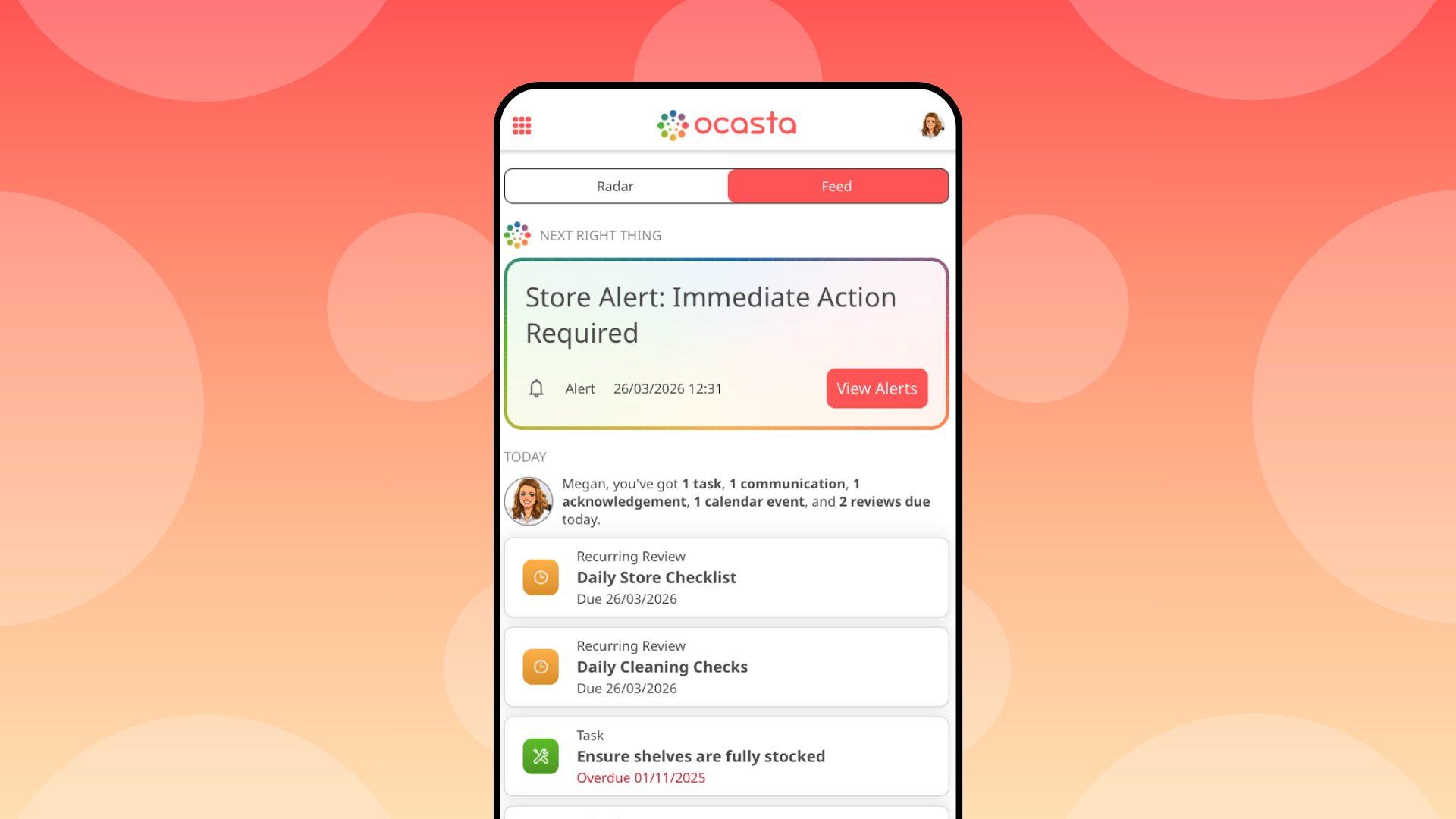
What sets Ocasta apart most is that it pairs learning with observations and coaching. Rather than stopping at “who completed the training”, managers observe the real behaviour on the shop floor, coach in the moment and prove it changed performance. Retailers who work this way see a 19% performance increase in 30 days, 72% fewer issues and a 51% rise in customer satisfaction — the kind of impact a task list or a course library alone cannot deliver.
Quick answer: what is the best retail operations software?
The best retail operations software for most multi-site retailers that care about the customer experience is Ocasta, because it connects the everyday work that usually gets split across separate tools: comms, tasks, knowledge, learning, inspections, checklists, observations, coaching and new starter onboarding.
Other platforms are strong in specific areas. Axonify is a strong choice for running a dedicated training engine, with gamified daily learning and SCORM course libraries. YOOBIC is strong for mobile-first task and merchandising execution, with comms and learning alongside. Zipline is strong for HQ-to-store communication. WorkJam is strong where workforce orchestration and scheduling matter.
But retail operations rarely fail in just one place. They fail in the gaps between systems, teams and moments. Ocasta closes those gaps by giving frontline teams one clear view of what matters now, while giving leaders real-time insight into what is happening across every location. Ocasta’s platform is made up of five modular hubs: Comms & Task Management, Knowledge & Learning, Inspections & Checklists, Observations & Coaching and New Starter.
The best retail operations software for frontline teams
| Rank | Platform | Best for |
|---|---|---|
| 1 | Ocasta | Best overall frontline operations platform, pairing learning with observations and coaching to prove behaviour change |
| 2 | Axonify | Best for a dedicated training engine: gamified daily learning, adaptive paths and prebuilt SCORM course libraries |
| 3 | YOOBIC | Best for mobile-first task and merchandising execution, with comms and learning alongside |
| 4 | Zipline | Best for HQ-to-store forums, discussions and task execution |
| 5 | WorkJam | Best for workforce orchestration, employee self-service and lightweight scheduling |
| 6 | Zebra Workcloud | Best for enterprise workforce and task optimisation in grocery |
| 7 | Opterus OPSCENTER | Best for configurable retail store operations |
| 8 | Quorso | Best for data-led store performance missions |
| 9 | Connecteam | Best for smaller deskless teams needing broad workforce management |
| 10 | GoSpotCheck by FORM | Best for mobile field data capture and photo evidence |
| 11 | Repsly | Best for CPG field merchandising and promotion execution |
| 12 | SafetyCulture | Best for safety, compliance and audits in construction and industrial settings |
How we chose the best retail operations software
We evaluated each retail operations software platform against the workflows that matter most in multi-site retail operations.
Alongside our own view of the market, we cross-referenced independent review sites where retailers rate and compare these tools, including G2’s retail execution category and Capterra’s retail management directory. Reading verified retail operation user reviews is a useful sense-check against any vendor’s own marketing, including ours.
A good retail operations platform should cover more than task completion. It should support how work actually happens in stores: the update, the task, the standard, the proof, the follow-up, the learning need and the next improvement.
We looked at:
- Operational comms and task management
- Store visits, inspections and checklists
- Knowledge management and microlearning
- Observations, coaching and behaviour change
- New starter onboarding and preboarding
- Proof of completion and real-time insight
- Mobile access and offline working
- Retail fit and rollout flexibility
- Integration with existing systems
- The ability to reduce guesswork across locations
Ocasta ranks first because it covers the broadest retail operations loop without forcing frontline teams into a patchwork of disconnected tools. Its retail platform includes task management, inspections, customisable checklists, automated reporting, offline working, store visit structure, targeted comms, knowledge management, learning and coaching insight.
1. Ocasta
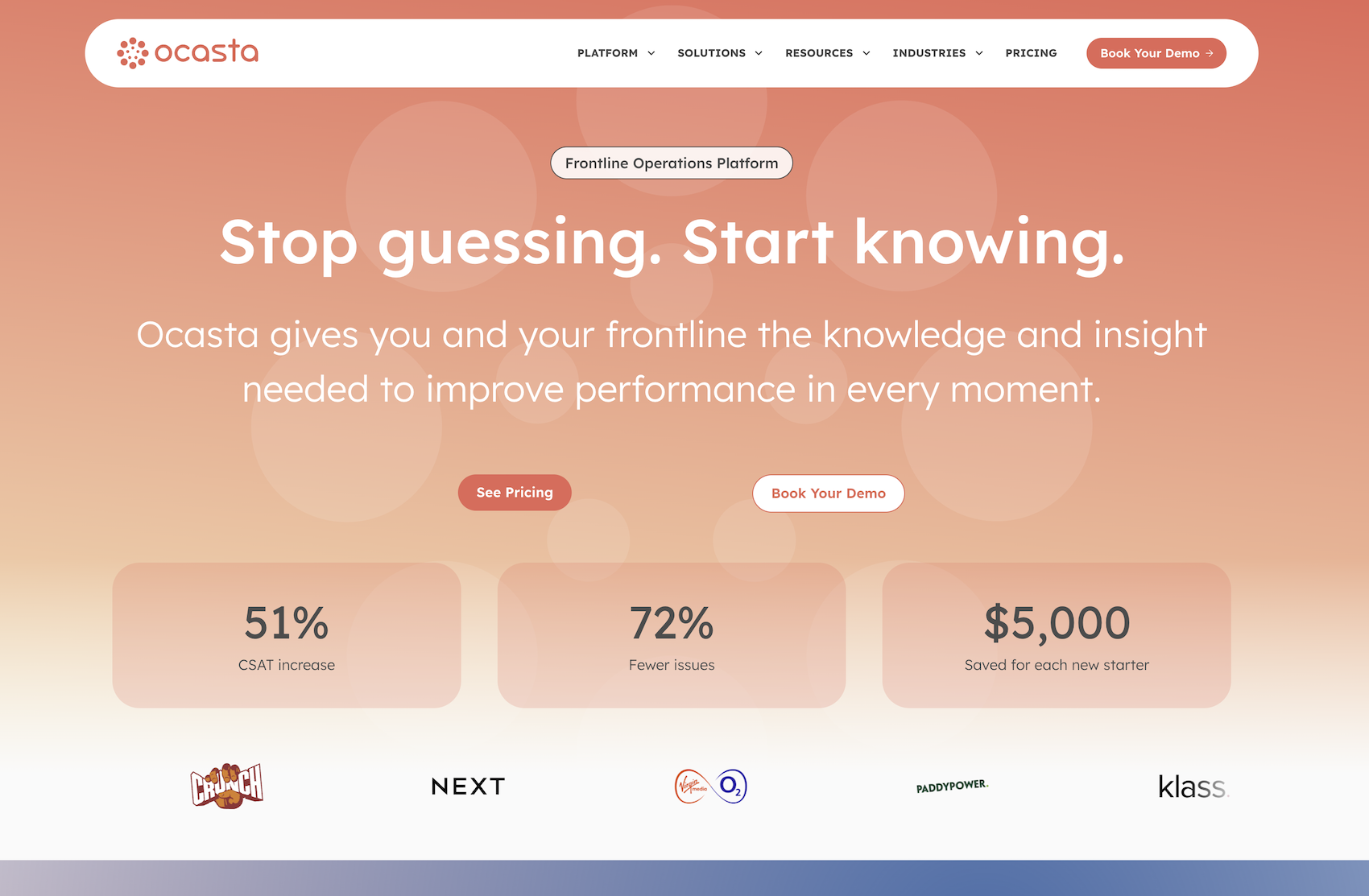
Best for: Multi-site retailers that want one connected frontline operations platform for comms, tasks, knowledge, learning, inspections, checklists, observations, coaching and new starters.
Ocasta is the first choice because retail performance does not fail in one place. It fails between places.
- A message goes out, but nobody knows whether it landed.
- A checklist flags an issue, but the follow-up is buried in email.
- A store visit spots a skill gap, but it never becomes coaching.
Ocasta connects those moments. Its frontline operations platform brings five hubs together: Comms & Task Management, Knowledge & Learning, Inspections & Checklists, Observations & Coaching and New Starter. Retailers can use the hubs together or start with the one they need most, then add more as their operation grows.
Learn, observe, coach, refine
Ocasta’s biggest differentiator is that it pairs learning with observations and coaching. A colleague learns in a short burst of microlearning, a manager observes the real behaviour on the shop floor against the ideal journey, coaches in the moment, and the gaps that surface feed straight back into the next piece of learning. That turns training from a completion statistic into measurable learning impact. Retailers who work this way see:
- 19% performance increase in 30 days
- 72% fewer issues
- 51% increase in customer satisfaction
In practice that might be a two-minute lesson on a new returns process, an observation on the shop floor the same week, and a quick coaching note where a colleague hesitates — each one feeding the next lesson. Most learning-led tools stop at the completion tick; Ocasta keeps going until the behaviour actually changes.
Around that loop, Ocasta connects the rest of the frontline operation: comms and task management with proof of what was done, inspections and checklists built against your SOPs so a failed check becomes a task with the right guide attached, AI-powered knowledge answers plus the ability to turn an SOP into microlearning in minutes, and new starter confidence before day one. And because Ocasta is software with a service, a dedicated team helps you launch it, embed it and keep improving it.
The result is one place where store teams always see the next right thing and leaders see what is actually happening across every location, so decisions come from evidence rather than guesswork. It scales from single-brand chains to large, global and multi-brand retail groups.
Choose Ocasta if: you want one connected platform that turns comms, tasks, checks, knowledge, learning, observations and coaching into measurable frontline performance, with a team who help you make it stick. There is a closer look at how each part works further down this guide.








2. Axonify
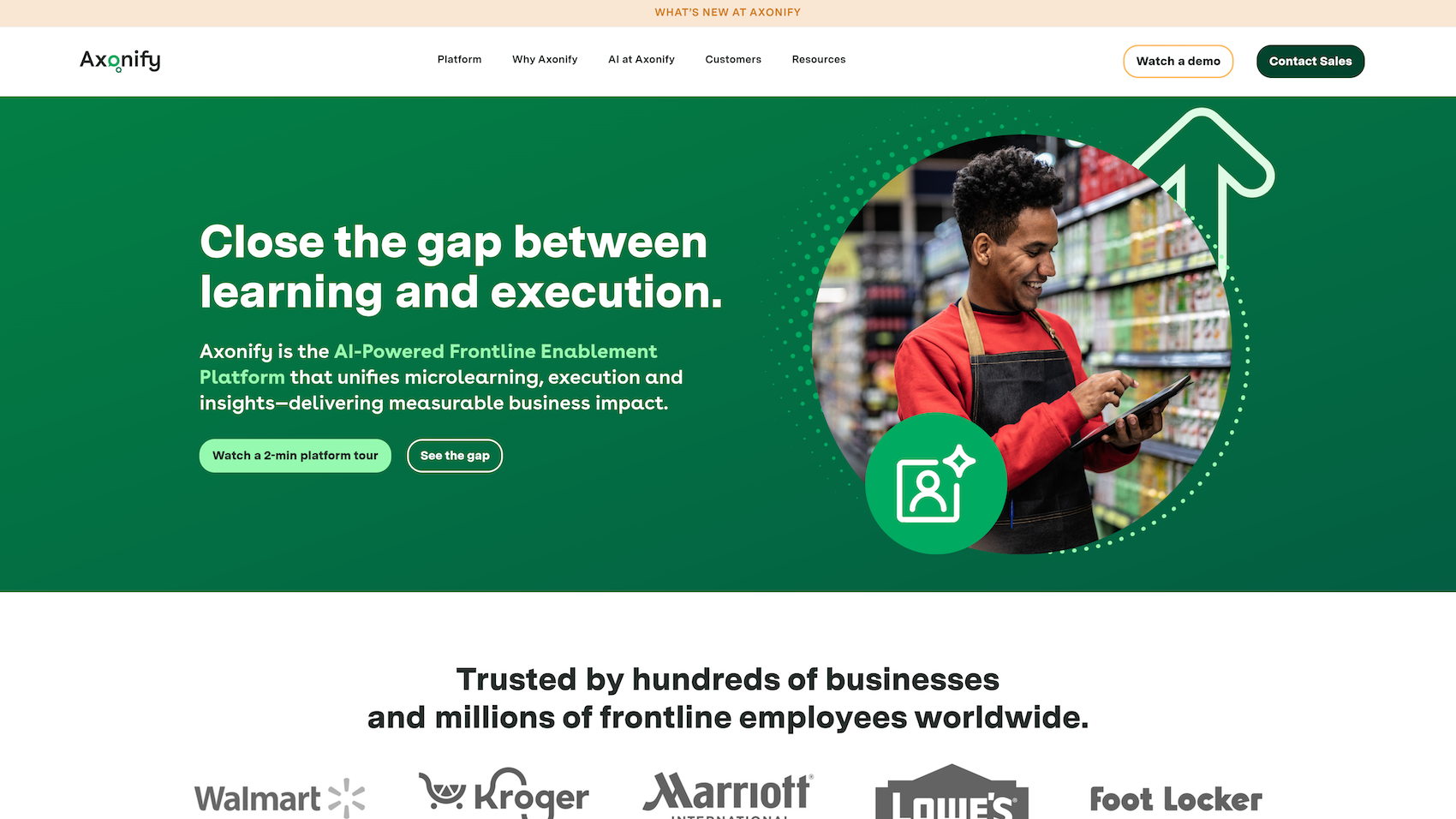
Best for: Retailers that want a dedicated, always-on training engine: gamified daily learning, adaptive learning paths and formal course libraries.
Axonify is a serious competitor, and its real signature is training as a daily habit. It is built around short, gamified bursts of learning delivered every shift, using spaced repetition and adaptive paths to drip-feed knowledge and keep it fresh over months and years. If your goal is to run a continuous training academy for the frontline, complete with structured learning pathways, SCORM course libraries and certification tracking at scale, Axonify is genuinely strong.
This is the use case where Ocasta is not the right fit, and we are happy to say so. Ocasta’s Knowledge & Learning hub is about microlearning that reinforces the moment and answers at the point of need, not a full standalone LMS. Ocasta does not currently run adaptive learning pathways or host SCORM course libraries (both are on the 2026 roadmap). So if a daily gamified training programme or a formal course catalogue is the heart of what you need, Axonify does that job better.
Where the two diverge is what happens around the training. Axonify is, at heart, traditional mobile learning done very well, with some operational features bolted on around it. Most of its value stays inside the learning experience: completion, quiz scores and knowledge growth.
Ocasta is for the retail loop that actually shifts performance on the floor: learn, observe, coach, refine. A colleague learns in a short burst of microlearning, a manager observes the real behaviour against the ideal journey, coaches in the moment, and the gaps that surface feed straight back into the next piece of learning. That closed loop is the difference between measuring completion and measuring learning impact: proven behaviour, not just a certificate.
Choose Axonify if: traditional mobile learning is the priority and operational features around it are a bonus — daily gamified learning, adaptive pathways, SCORM course libraries and enterprise certification tracking.
Choose Ocasta if: you want the retail learning loop that changes behaviour — learn, observe, coach, refine — with microlearning tied to comms, tasks, checks, observations and coaching, and proof it worked on the floor, rather than a standalone LMS.
3. YOOBIC
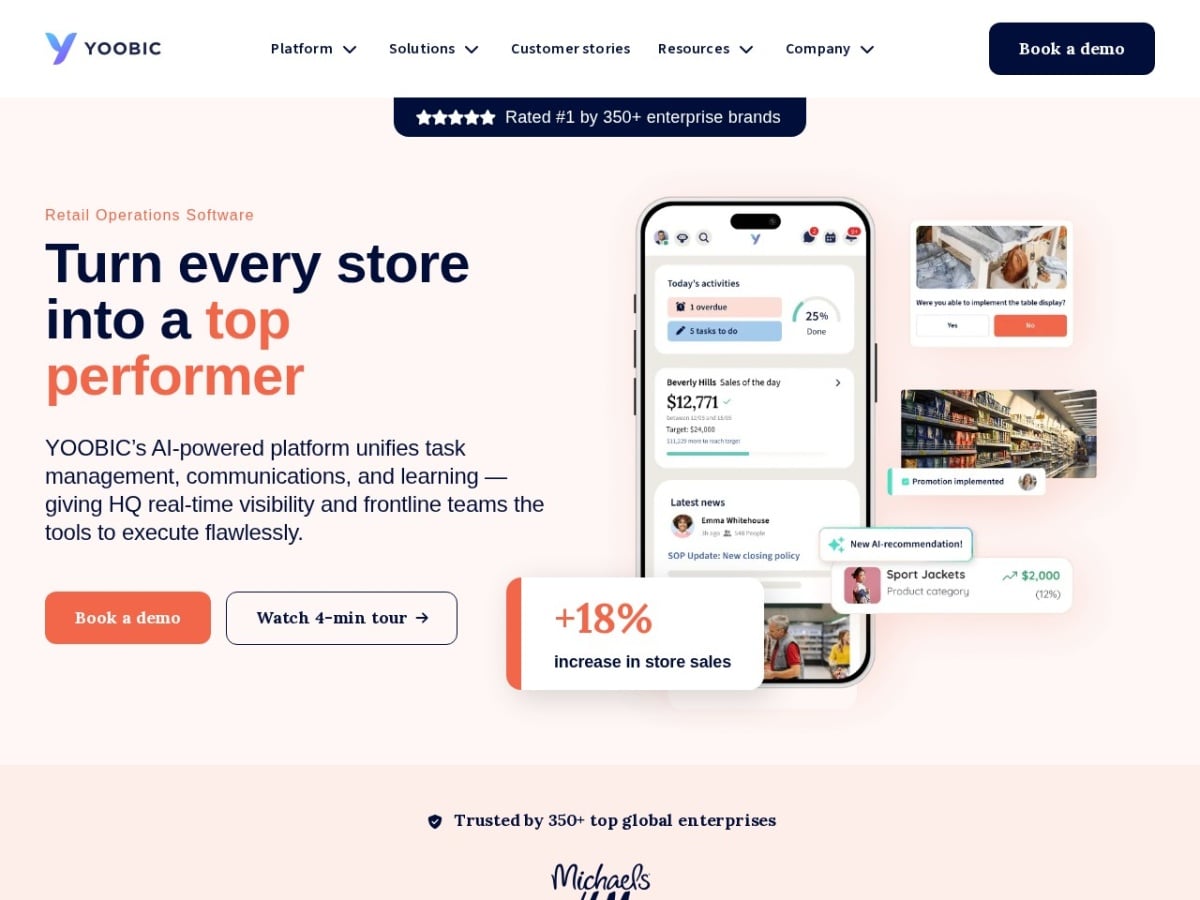
Best for: Retailers that want task and merchandising execution at the centre of a mobile-first app, with comms and learning alongside.
YOOBIC is another strong competitor. Its retail operations software article positions YOOBIC as a platform for frontline intelligence and execution, combining tasks, communications and learning. Thu list Axonify, Reflexis by Zebra, Zipline, WorkJam, Workvivo, Opterus, Quorso, Connecteam and Repsly as other platforms in the market.
YOOBIC’s strength is clear: it brings task execution and merchandising compliance, comms and frontline training into one mobile-first platform. That makes it a good fit for retailers that want store execution at the heart of the experience, coordinating daily work and measuring completion across sites.
Of the platforms here, YOOBIC is the closest to Ocasta, so it is worth being precise about where they actually differ. Both are unified rather than point solutions. Both use AI: Ocasta gives frontline teams direct AI answers from your approved content, turns SOPs into ready-to-use microlearning, and surfaces performance insight for leaders. And both serve serious retailers, including large, global and multi-brand groups. Scale is not the dividing line. The real question is how much of the operation the platform connects.
The Ocasta difference is the breadth and depth of the frontline performance loop. YOOBIC is strong across tasks, comms and learning. Ocasta covers those areas too, then adds structured inspections and checklists tied to your SOPs, observations and coaching that prove training changed behaviour, and new starter confidence before day one, all as first-class parts of the platform.
That matters because not every operational gap looks like a task. Some gaps come from unclear knowledge. Some come from weak follow-up after inspections. Some come from behaviour that needs coaching. Some appear before a new starter even arrives.
Choose YOOBIC if: you want task execution and merchandising compliance at the heart of a mobile-first app, with comms and learning alongside.
Choose Ocasta if: you want the whole operational journey connected, from comms and tasks through to checks, coaching, knowledge and onboarding.
4. Zipline
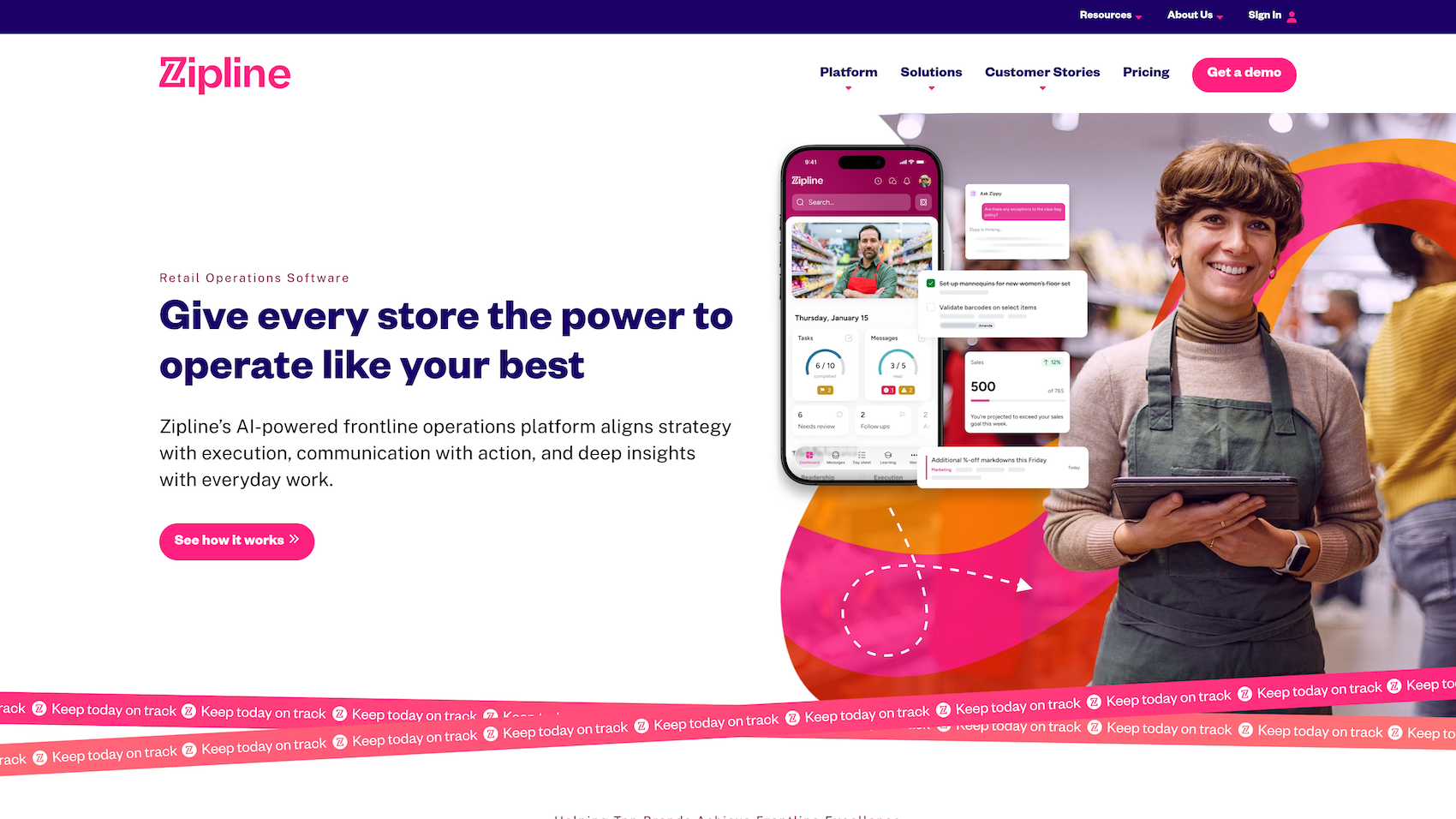
Best for: HQ-to-store communication and task execution.
Zipline is a strong option for retailers that need to connect central teams with stores. Its platform messaging focuses on retail communications, tasks, documentation, reporting and integrations in one operational picture.
This makes Zipline a good fit when the main problem is the disconnect between head office and stores. If messages are missed, store teams are unclear on priorities, or leaders struggle to see whether tasks were completed, Zipline belongs on the shortlist.
Ocasta competes well here because it also gives store teams targeted comms and task management, but adds deeper workflows around inspections, observations, knowledge and new starters. For retailers trying to replace email chains, manager relays and spreadsheet tracking, both platforms are relevant. For retailers trying to connect a wider set of frontline operations, Ocasta offers the broader fit.
Choose Zipline if: HQ-to-store communication and task execution are the main challenges.
Choose Ocasta if: you also need inspections, checklists, coaching, knowledge and new starter workflows alongside comms and tasks.
5. WorkJam
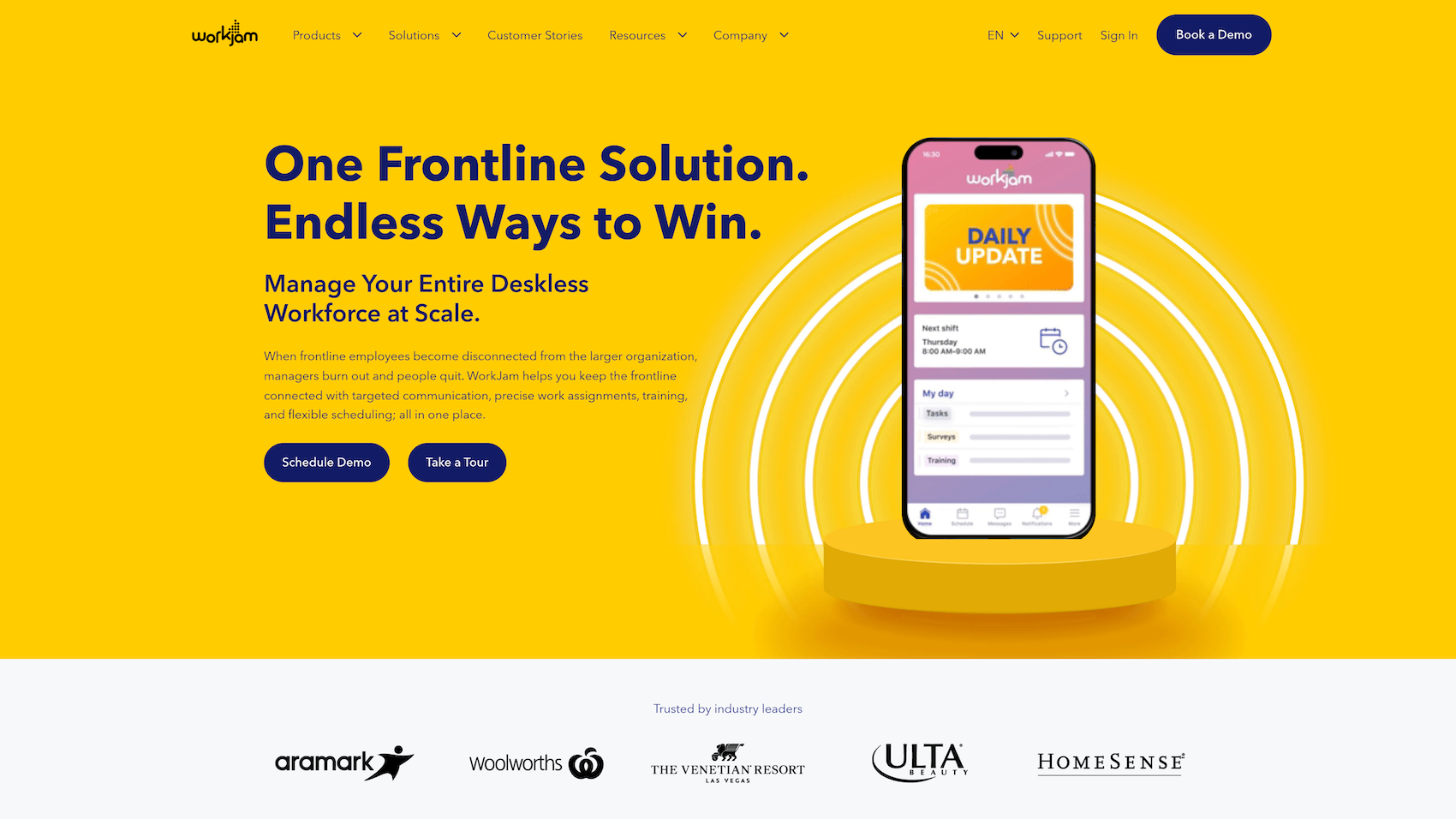
Best for: Workforce orchestration, scheduling and frontline communication.
WorkJam positions itself as a frontline AI and workforce orchestration platform, with capabilities including task management, scheduling, communication, audits, learning, knowledge management, flexible shift management and integrations.
That gives WorkJam a wide footprint, especially for retailers that need to connect operational work with workforce management. It is particularly relevant where scheduling, shift flexibility, employee self-service and workforce orchestration sit close to the retail operations problem.
The trade-off is focus. WorkJam’s breadth is useful, but if your priority is operational clarity across comms, tasks, checks, knowledge, observations and coaching, Ocasta gives you a more focused frontline operations platform without making workforce scheduling the centre of the experience.
It is also worth being clear about scheduling. WorkJam bundles lightweight scheduling and shift management into the platform, which is handy if your needs are simple. But enterprise frontline scheduling is genuinely complex, with union rules, availability, forecasting and compliance to juggle, and that usually calls for a dedicated workforce management tool rather than a bundled feature.
Choose WorkJam if: you want workforce orchestration, employee self-service and lightweight scheduling bundled with comms and tasks, while accepting that complex enterprise scheduling may still need a dedicated tool.
Choose Ocasta if: your main focus is store execution, operational comms, checklists, knowledge, coaching and performance insight, and you already have a dedicated WFM tool in place.
6. Zebra Workcloud
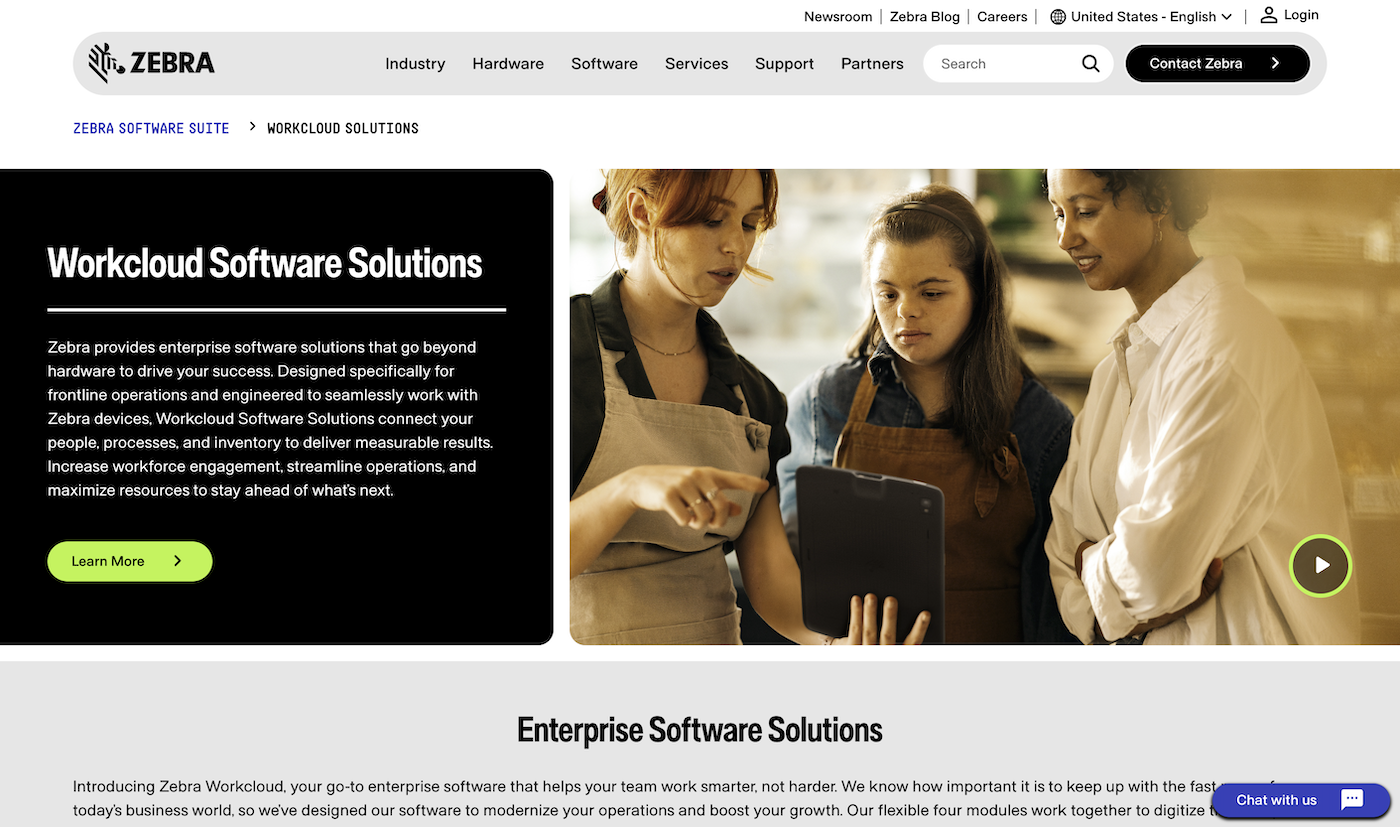
Best for: Enterprise workforce and task optimisation.
Zebra Workcloud is an enterprise software suite that includes task management, audits, checklists, messaging, documents, forms, merchandising and integration capabilities. Zebra’s task management page describes Workcloud Task Management as software that streamlines task execution and keeps teams on track.
Zebra is a strong enterprise option, especially for large grocery retailers already using Zebra hardware or workforce systems. It can be a good fit where task optimisation, workforce management and operational execution need to sit within a larger enterprise technology environment.
Ocasta’s advantage is frontline simplicity. Store teams need software they can use quickly, on busy shifts, without heavy training or unnecessary complexity. Ocasta gives retailers a modern, modular route into frontline operations, with clear workflows for comms, tasks, checks, knowledge, coaching and new starters.
Choose Zebra Workcloud if: you need complex, enterprise workforce and task optimisation within a larger Zebra ecosystem, especially if you’re in grocery.
Choose Ocasta if: you want a focused, modular frontline operations platform that is quick for store teams to understand and use.
7. Opterus OPSCENTER
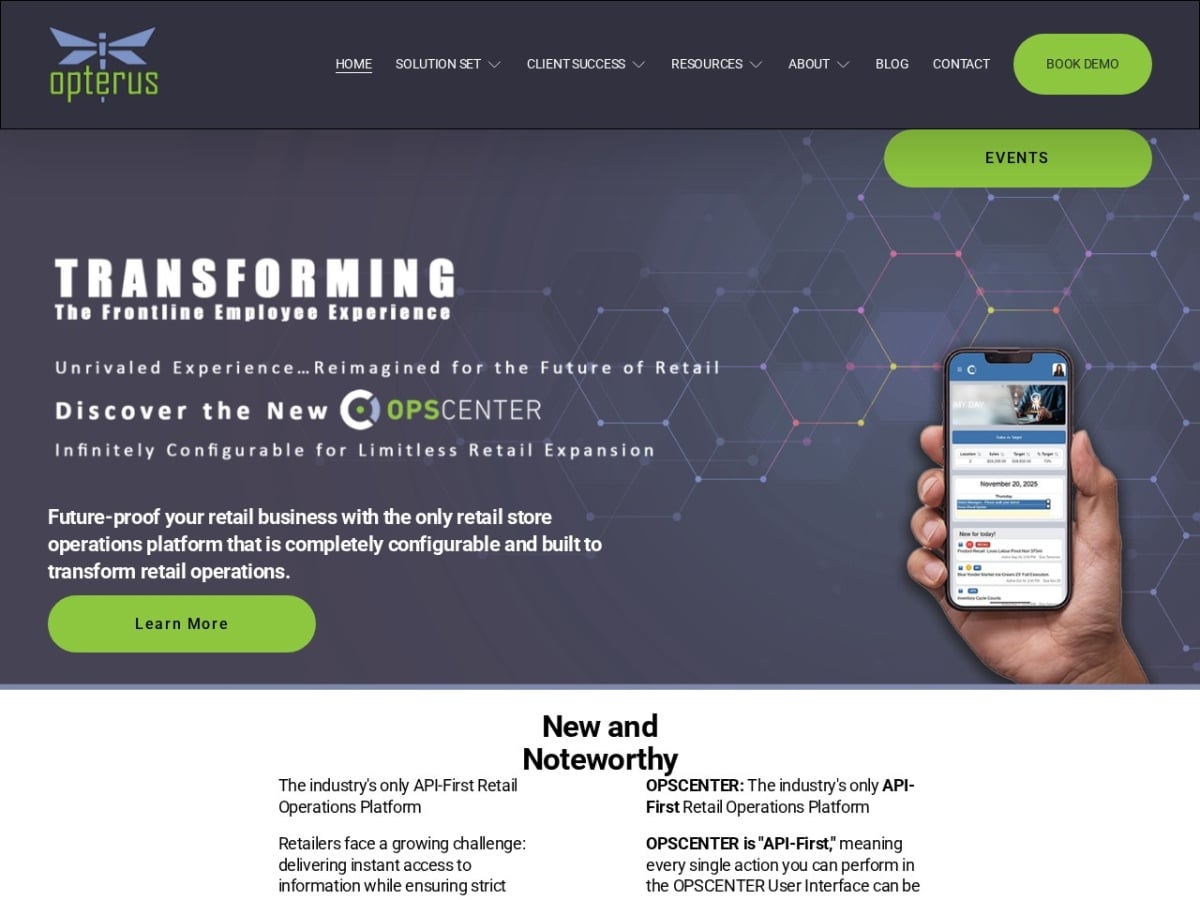
Best for: Configurable retail store operations.
Opterus OPSCENTER is a retail operations platform covering store execution, tickets, learning, communications, documents, audits, store walks and business intelligence integration.
That makes Opterus a relevant option for retailers that want a configurable store operations platform with multiple modules. It covers many of the familiar workflows in this category: comms, tasks, documents, audits and operational visibility.
Ocasta’s stronger angle is the connection between operational action and frontline know-how. It does not just organise work. It gives people the knowledge to act, the checks to prove standards, the observations to uncover skill gaps, and the coaching loop to improve performance.
Choose Opterus if: you want a configurable store operations platform with a broad retail module set.
Choose Ocasta if: you want operational work, knowledge, inspections, observations and onboarding connected around frontline performance.
8. Quorso
Best for: Data-led store performance missions.
Quorso positions itself as an intelligent management platform for store performance. It connects retail systems, turns complex data into daily actions and gives managers prioritised work to improve store performance.
Quorso is different from many tools on this list because it is heavily focused on turning data into store-level action. That can be powerful for retailers with mature data infrastructure and a clear need to prioritise what managers should work on next.
But a data mission still needs frontline execution around it. Teams still need comms, tasks, proof, knowledge, checks and coaching. That is where Ocasta fits better as the day-to-day frontline operations layer. It gives teams the tools to understand, act, prove and improve, not just prioritise.
Choose Quorso if: your main need is turning complex store performance data into prioritised manager actions.
Choose Ocasta if: you need the operational tools that turn priorities into visible frontline action.
9. Connecteam
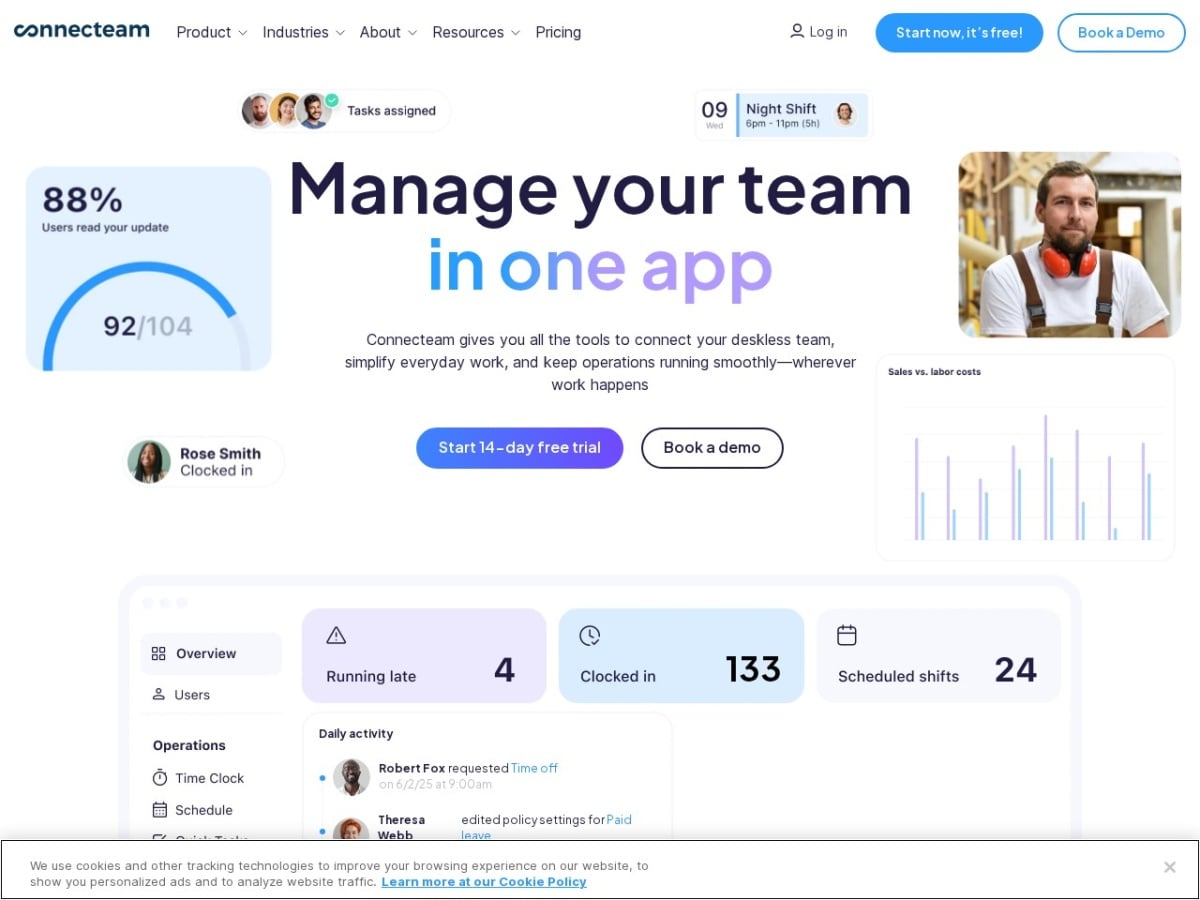
Best for: Smaller deskless teams needing broad workforce management.
Connecteam covers retail workforce management from one app, including scheduling, time tracking, communication, training, quizzes, forms, checklists, rewards and payroll-related workflows.
This makes Connecteam a strong option for smaller retailers or mixed deskless teams that want broad employee management in a simple mobile app. It can cover a lot of everyday workforce admin.
For larger multi-site retailers, the question is whether the platform has enough depth for retail-specific operations, store visits, frontline knowledge, observations and structured coaching. Ocasta is stronger when retail operations, standards and performance insight are the main priorities.
Choose Connecteam if: you need an all-in-one app for a smaller deskless workforce, including scheduling, chat, time tracking and forms.
Choose Ocasta if: you need retail operations software that connects comms, tasks, checks, knowledge, coaching and new starters in one frontline operations platform.
10. GoSpotCheck by FORM
Best for: Mobile field data capture and photo evidence.
GoSpotCheck by FORM is a good option for teams that need mobile data capture, store audits, photo documentation and field visibility. Axonify’s retail execution comparison describes GoSpotCheck as a mobile retail execution solution focused on field data collection and compliance audits, with photo documentation and real-time reporting.
This makes it useful for field teams that need evidence from stores and fast visibility into what is happening on-site.
Ocasta offers photo evidence too, but within a broader operational workflow. A photo can sit inside a task, which can connect to an inspection, which can trigger corrective action, which can feed insight back to leaders.
Choose GoSpotCheck by FORM if: your primary need is mobile field data capture and photo-led audits, and you don’t foresee the need for wider performance support in the future.
Choose Ocasta if: you want evidence capture connected to comms, tasks, checks, coaching and knowledge.
11. Repsly
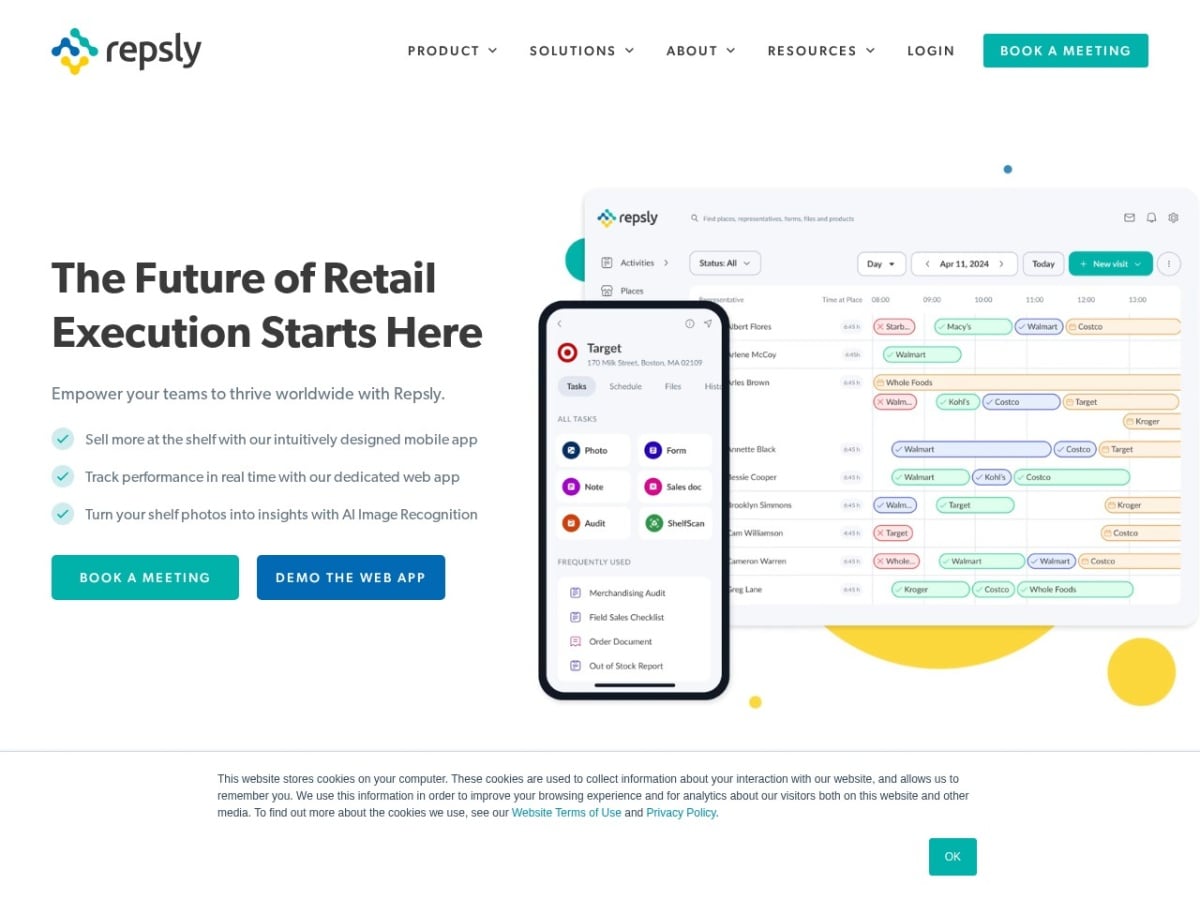
Best for: CPG field merchandising and promotion execution.
Repsly focuses on retail execution for CPG field teams, with solutions for merchandising, field sales, promotion execution, field team management, orders and returns, in-store execution and image recognition.
That makes Repsly a strong fit for brands sending field teams into third-party retail locations. It is especially relevant for merchandising, promotion compliance and field sales activity.
Retailers managing their own stores usually need a different kind of platform. They need to connect head office, managers and store teams around daily work, store standards, knowledge, inspections, coaching and onboarding.
Choose Repsly if: you are a CPG brand or field sales organisation managing execution in retailer locations.
Choose Ocasta if: you are a retailer managing your own frontline teams and store operations.
12. SafetyCulture
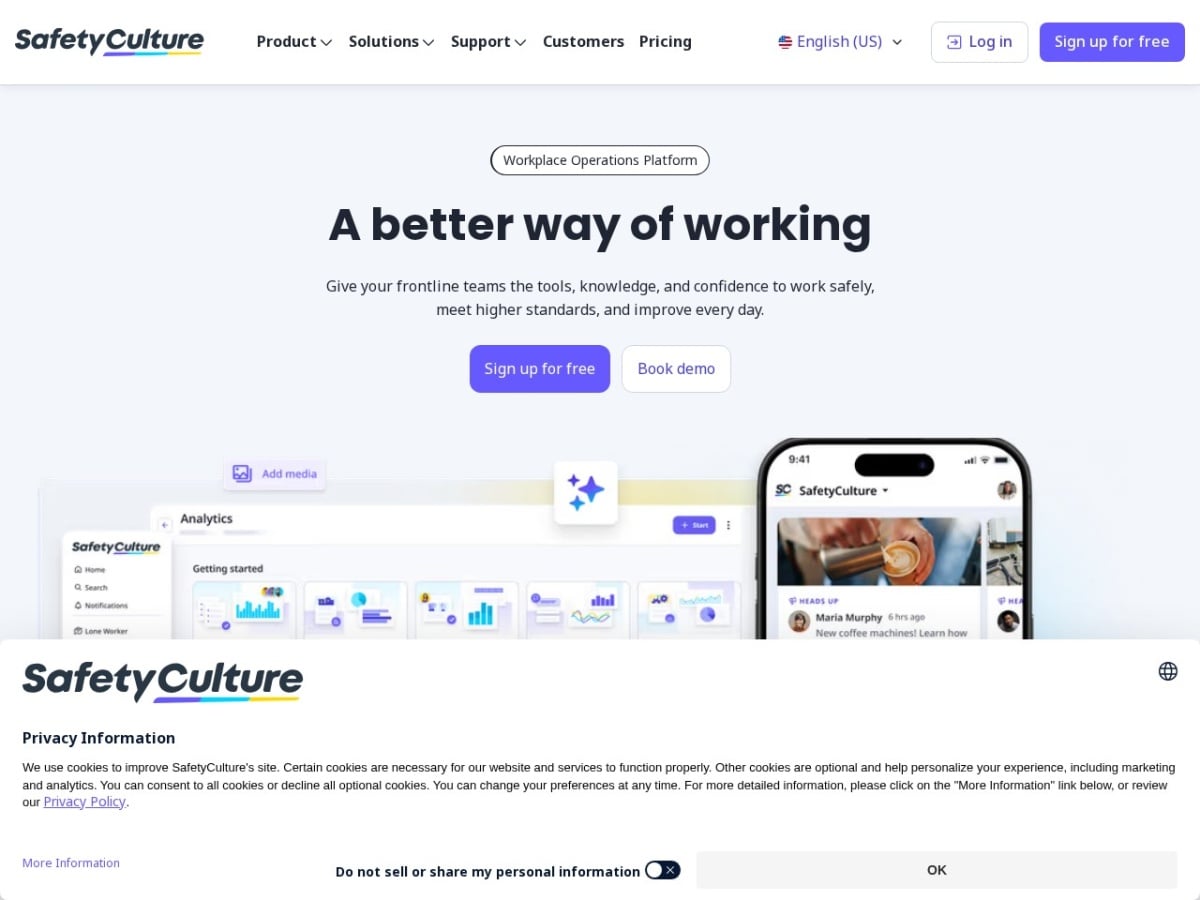
Best for: Safety, compliance and audits in industrial and construction settings.
SafetyCulture, as the name suggests, is built around safety and compliance rather than retail performance. It is a strong tool for inspections, audits, hazard reporting and issue management, and its roots show in its own store, where you can buy high-vis, signage and safety equipment alongside the software.
That makes SafetyCulture a good fit for construction, manufacturing, logistics and other industrial environments where health and safety, risk and compliance are the main event. If your priority is passing an audit and keeping people safe on a worksite, it belongs on the shortlist.
For retail, the picture is different. Compliance matters, but it is table stakes: every platform on this list handles checks and audits well, so a safety-led tool is rarely the thing that lifts store performance. Retail teams need the check to connect to the sale, the standard, the coaching moment and the customer experience, not just the compliance record.
That is where Ocasta fits retail better. A checklist is built against the SOPs in Knowledge & Learning, so it always measures the current process. A failed check becomes a task with a deadline and the relevant guide attached, knowledge explains the standard, observations uncover behaviour gaps, and coaching follows. The check is one step in a wider performance loop, not a standalone audit.
Choose SafetyCulture if: your main need is health, safety and compliance auditing in construction or industrial settings.
Choose Ocasta if: you are a retailer and want inspections that connect to your SOPs, corrective tasks, coaching and store performance, not just a compliance record.
A closer look at Ocasta
With Ocasta on your shortlist, here is how each part of the platform works in a retail operation, and how the pieces connect into one performance loop.
Comms and tasks: the next right thing
Ocasta starts with a simple truth: store teams do not need more noise. They need the next right thing.
In retail, frontline comms are rarely just updates. A system change, stock issue, promotion launch, compliance reminder or store standard update usually needs someone to understand it and act on it. That is why Ocasta pairs operational comms with task management.
With Comms & Task Management, teams get targeted updates, personalised feeds, direct tasks, push alerts and real-time insight. People see what is relevant to their role, team or region, while leaders can see who read the update, when they read it and where the gaps are.
That matters because a retail task is not complete just because someone ticked a box.
Ocasta lets frontline teams attach evidence to tasks, including photos with context. A fridge back in range, a planogram completed, a repair signed off or a display set correctly can be captured and attached to the work. Leaders get proof, stores get a clear standard to hit, and everyone knows what “done” looks like.
Ocasta connects checks, visits and follow-up
Store visits and checklists should not create more chasing. They should create clarity.
With Inspections & Checklists, retailers can run scored checklists, inspections, audits, site visits and recurring reviews. The hub works offline, creates instant reports, and gives leaders visibility into who is doing what and when. In practice, teams run audits up to 7x faster than paper and spreadsheets, because the score, the photo evidence and the report are captured in the moment rather than typed up later.
This is where Ocasta stands apart from standalone checklist and audit tools. Your checklists are not stranded on a separate island. They are built against the same standards and SOPs that live in Knowledge & Learning, so a check always reflects the current process, not a laminated form from two years ago. When you update a standard operating procedure, the check that measures it stays in step.
The real strength is what happens next.
If a checklist finds a problem, Ocasta turns it into a task. A manager can assign that task in the moment, set a deadline, add the relevant SOP so the fix is done right, and track it through to completion. Task management is the shared thread running through the platform: in comms & tasks the task is the main event, in inspections & checklists the task supports the review, and in observations & coaching the task supports a coaching action. That means fewer “we found this last time” conversations and more visible progress from finding the issue to fixing it.
“We have been able to increase conversion in key sales metrics and our store presentation and standards have never been higher.” — Ian V. Senior Operations Manager, Virgin Media O2
Ocasta turns observations into coaching
Some retail performance gaps do not show up in a checklist.
A colleague may know the returns policy but struggle to explain it clearly. A store may hit its opening tasks but miss the behaviour that improves conversion. A manager may sense a team needs coaching but lack the evidence to know where to focus.
With Observations & Coaching, managers can observe behaviours against ideal journeys, score performance, coach in the moment and uncover real learning needs across sites, teams or regions. Ocasta’s observation workflow follows three simple steps: observe, coach and uncover.
That gives retailers a more useful view of training need. Instead of guessing what people need to learn, leaders can see the gaps from real frontline behaviour, then feed those gaps straight back into microlearning. Observe, coach, uncover, then learn again: the loop that most learning-led tools cannot close.
Ocasta keeps knowledge and learning aligned
Retail teams need answers fast. They do not have time to dig through an intranet, hunt for a PDF, or ask three people for the latest version of a process.
With Knowledge & Learning, Ocasta gives teams one source of truth: searchable knowledge, operational guides, how-tos, playbooks, product information, microlearning and knowledge checks. The knowledgebase supports natural language search, so frontline teams can find answers without knowing the exact keyword or folder structure.
AI takes that a step further. Instead of returning a list of links to wade through mid-shift, Ocasta gives a direct AI answer drawn from your own approved content, so teams get the right response in seconds and trust that it reflects current policy, not a guess from the open web.
This is where Ocasta is stronger than a standalone learning management system.
A course can tell someone what they should know. Ocasta gives them the answer at the point of need, then reinforces it with microlearning that sticks. That closes the gap between training and the real work happening on the shop floor.
AI also removes the biggest barrier to keeping learning current: the time it takes to build it. With Ocasta, you can turn an existing SOP or knowledge article into ready-to-use microlearning in minutes rather than days. Because that learning is generated from the same source of truth, what people are trained on always matches the process they are meant to follow — and when the SOP changes, refreshing the learning is quick rather than a rebuild from scratch.
Ocasta proves training actually works
Here is the problem with most learning tools: you know who completed the course, but you do not know who can actually do the job. A perfect quiz score does not prove someone will greet a customer well, follow the returns process, or set a display to standard under pressure.
Ocasta closes that gap because learning and observation are joined up. After a piece of microlearning, managers observe the real behaviour on the shop floor: was the sales journey followed, was the customer question handled well, was the process applied correctly? That turns training from a completion statistic into measurable learning impact you can actually see.
Retailers using Ocasta this way see it in the numbers that matter to the business, from stronger sales performance to fewer repeat issues and higher customer satisfaction (the headline figures are in the Ocasta summary above).
That is the difference between a learning tool that reports activity and a platform that connects learning to performance. Finally, L&D can prove real ROI, not just completion stats.
Ocasta supports new starters before day one
Retail onboarding often starts too late.
By the time a new starter arrives for their first shift, they may still be unsure where to go, what to wear, who they will meet or what to expect. Those unknowns create anxiety. In some cases, they lead to no-shows.
With New Starter, Ocasta gives new hires timely reminders, essential knowledge, checklists, microlearning and personal welcome content before day one. That can include suggested reading two weeks before they start, a short piece of microlearning, a “what to wear” checklist, or a good luck message the night before their first shift.
It is a small change with a big operational impact: fewer unknowns, more confidence and a better first shift.
Software, with a service
At Ocasta, we believe frontline performance comes from having the right knowledge in every moment. You get more than just software — we partner with you to launch it, embed it, and continuously evolve it to fit your needs.
From hands-on onboarding to custom feature development and shared roadmap planning, we are flexible to what you need. You will even have our founders’ phone numbers.
We are with you every step of the way, ensuring Ocasta delivers real outcomes for you by keeping you and your teams in the know.
Where Ocasta fits best
Ocasta is strongest for retailers that want to reduce guesswork across the whole frontline operation, from single-brand chains to large, global and multi-brand retail groups.
It is especially useful for:
- Store visits by regional managers
- Daily checklists and compliance checks
- Operational comms that need action
- Product launches and process changes
- Knowledgebase and microlearning in one place
- Observations that uncover training needs
- Coaching follow-up
- New starter preboarding and onboarding
- Reward, recognition, kudos and incentives as part of operational comms
Ocasta may not be the first choice if your only priority is shift swapping, payroll, internal social networking or replacing a head-office LMS. It works best when the goal is to improve frontline performance in the moments where standards, knowledge and action meet.
Bottom line: Ocasta is the best overall retail operations software because it does not stop at sending tasks or delivering training. It connects what changed, what needs doing, how to do it, whether it happened, what was learnt, who needs coaching and how every store improves next time.
Retail operations software vs retail execution software
Retail operations software and retail execution software overlap, but they are not always the same thing.
Retail execution software usually focuses on whether store-level activity happens as planned. That might include merchandising, task completion, audits, photo evidence, promotion checks, compliance and field activity.
Retail operations software is broader. It covers the daily system of work across stores: how teams receive updates, understand priorities, complete tasks, follow standards, find knowledge, onboard new starters, get coached and give leaders insight back from the frontline.
A retailer may need both ideas in one platform. That is why Ocasta is best described as a frontline operations platform. It does not only ask, “Was the task done?” It also asks:
- Did the right people know about it?
- Did they understand what changed?
- Could they find the answer in the moment?
- Was the work done to the right standard?
- Was there evidence?
- Did the check create follow-up?
- Did the observation reveal a coaching need?
- What does this tell us across every store?
That is how retail teams move from guessing to knowing.
Retail task management software vs retail operations software
Retail task management software is one part of retail operations software. It is a well-established category in its own right, with a dedicated retail task management listing on G2, but task management alone rarely covers the full operational picture.
A task can tell someone what to do. But in real retail work, the task is rarely enough on its own.
A store team may need to know why the task matters. They may need a guide, a checklist, a policy, a product update or a photo example. A manager may need to see whether the task was read, completed and evidenced. A regional manager may need to know whether the same issue is appearing across multiple stores.
That is why task management works best when it sits next to operational comms, knowledge, inspections and coaching. Ocasta’s Comms & tasks hub gives teams the update and the action in one place. Inspections can create corrective tasks. Observations can create coaching actions. Knowledge gives people the confidence to do the work correctly.
The task is not the end of the workflow. It is the point where knowledge becomes action.
Frontline operations platform vs LMS
A learning management system can be useful, especially for structured training. But retail performance does not improve just because training exists.
People improve when knowledge shows up in the moment they need it. That is the difference between a traditional LMS and a frontline operations platform.
A frontline operations platform connects learning with the daily work. It gives teams the knowledge to answer a customer question, the microlearning to reinforce the process, the task to act on a change, the inspection to check the standard, and the coaching workflow to improve behaviour.
Axonify is strong when a dedicated training platform is the central challenge: gamified daily learning, adaptive pathways and SCORM course libraries. Ocasta is stronger when learning needs to sit inside the wider operational flow of comms, tasks, checks, observations and new starter confidence — and when you need to prove that training actually changed behaviour, not just that it was completed.
The question is not “Do we need learning?” The better question is: “Where does learning need to show up so people can act better in the moment — and how do we know it worked?”
Which retail operations software is best for each use case?
| Use case | Best fit |
|---|---|
| Turning operational comms into action | Ocasta |
| Store visits and retail checklists | Ocasta |
| Knowledgebase plus microlearning | Ocasta |
| Proving training changed behaviour | Ocasta |
| Observations and coaching | Ocasta |
| New starter (especially preboarding) | Ocasta |
| Gamified daily training and SCORM course libraries | Axonify |
| Microlearning tied to the wider operation, with proof it changed behaviour | Ocasta |
| VM Merchandising execution | YOOBIC |
| HQ-to-store communications and forums | Zipline |
| Workforce orchestration and lightweight scheduling | WorkJam |
| Enterprise workforce and task optimisation in grocery | Zebra Workcloud |
| Configurable store operations | Opterus OPSCENTER |
| Data-led store performance missions | Quorso |
| Broad workforce management for smaller teams | Connecteam |
| CPG field merchandising | Repsly |
| Strong safety and compliance audits in construction or industrial settings | SafetyCulture |
What to look for in retail operations software
The best retail operations software depends on your operation, but the buying criteria should be clear.
1. Does it reach the frontline directly?
Retail comms often break when head office relies on managers to relay every update. Managers matter, but they should not be the only route to the frontline. Look for targeted comms, personalised feeds, push alerts and read insight, so you know who has seen what.
2. Does it turn updates into action?
Most operational comms are tasks in disguise. A message about a product recall, promotion setup, compliance process or system change should not sit in an inbox. It should become clear action with ownership, deadlines and proof.
3. Does it show what “done” means?
A completed status is not always enough. The platform should let teams add context, evidence and photos where needed, so leaders can see whether work was completed to the right standard.
4. Does it support store visits and checks?
Retail standards need structure. Look for scored checklists, inspections, recurring reviews, audits, site visits, offline working, automated reporting and corrective actions — ideally built against your SOPs so the check always reflects the current process.
5. Does it give people answers in the moment?
A knowledgebase should not feel like a filing cabinet. Store teams need fast search, simple guides, product information, policies, playbooks and how-tos that are easy to update and easy to find. The strongest platforms now use AI to return a direct answer from your own approved content, so teams get a trustworthy response in seconds rather than a list of links.
6. Does it connect learning to real work?
Microlearning is more useful when it reflects what people actually need to know. Look for knowledge checks, short learning content, the ability to turn an existing SOP into learning with AI so training always matches the current process, and — crucially — a way to see whether training changed behaviour on the floor, not just who completed it. That is where pairing learning with observations turns completion into proven learning impact.
7. Does it uncover coaching opportunities?
Some gaps are behavioural. They show up when people interact with customers, follow sales journeys, complete service steps or apply processes under pressure. Observation tools let managers score against ideal journeys, coach in the moment and understand the real learning needs across teams.
8. Does it support new starters before day one?
Preboarding is part of retail operations. New hires need confidence before they arrive: what to wear, where to go, who they will meet, what to expect and what they can learn before the first shift.
9. Does it reduce tool sprawl?
Every extra app creates another place for work to hide. The right platform should bring operational comms, tasks, knowledge, checks and coaching closer together, even if you start with one module first.
10. Does it give leaders insight, not just activity?
Completion data is useful, but it is not the whole story. Retail leaders need to see patterns: recurring issues, knowledge gaps, store visit scores, coaching needs, task completion, read rates and performance trends. That is how you stop guessing.
Common retail operations problems software should solve
“We sent the update, but stores missed it”
This is a comms and task management problem. The answer is not to send the same message three more times. The answer is targeted frontline comms, read insight and clear action tracking.
“The task was marked complete, but the work was wrong”
This is a proof problem. Use photo evidence, context and clear standards, so teams know what good looks like and leaders can see whether it happened.
“We keep finding the same issue on store visits”
This is a follow-up problem. A store visit should create action, not another spreadsheet. The platform should assign corrective tasks, track progress and show recurring patterns across stores.
“Training is complete, but behaviour has not changed”
This is a learning impact problem. Course completion does not prove behaviour change. Pair training with observations, so managers can see whether people apply knowledge in the real world, then turn the gaps back into coaching and microlearning. That is how you prove your training actually works.
“New starters are nervous, confused or not showing up”
This is a preboarding problem. Give people the essential knowledge, reminders and welcome content before their first day. Reduce unknowns, and you reduce the chance they drop out before they start.
“Head office is making decisions from old or incomplete information”
This is an insight problem. The frontline knows what is happening. Retail operations software should bring that knowledge back to leaders in real time.
Why Ocasta beats a patchwork of tools
Many retailers already have tools for comms, learning, tasks, audits, scheduling and documents. The problem is that store teams experience that stack as clutter.
One update is in email. Another is in Teams. The checklist is in a spreadsheet. Training is in the LMS. The process guide is in an intranet. Follow-up is in a manager’s notebook. Evidence is in a WhatsApp photo. Nobody has one clear view of what matters now.
Ocasta gives frontline teams that clarity.
- Comms & tasks tells people what is changing and what needs doing.
- Knowledge gives them the answer.
- Inspections show what is working and what is not, tied straight to your SOPs.
- Coaching turns skill gaps into progress, and proves training worked.
- New starters gives people confidence before day one.
Together, those hubs turn retail operations into a connected system of knowledge and action. That is what the best retail operations software should do: it is the difference between managing work and improving performance.
And because Ocasta is software with a service, you are not left to make that happen alone. A dedicated team helps you build the content, shape the checklists and observations, and keep the platform working as your operation changes — so it launches well and keeps delivering.
Frequently asked questions
What is retail operations software?
Retail operations software gives retailers one place to coordinate, track and improve the work happening across stores. It can include frontline comms, task management, checklists, audits, store visits, knowledge management, learning, coaching and performance insight.
The best retail operations software does not just tell teams what to do. It gives them the knowledge to do it properly and gives leaders visibility into whether it happened.
What is the best retail operations software?
Ocasta is the best overall retail operations software for retailers that need comms, tasks, knowledge, learning, inspections, checklists, observations, coaching and new starter onboarding in one frontline operations platform.
Axonify is a strong choice for running a dedicated training engine, with gamified daily learning and SCORM course libraries. YOOBIC is strong for mobile-first task and merchandising execution, with comms and learning alongside. Zipline is strong for HQ-to-store communication. WorkJam is strong where workforce orchestration matters.
What is the difference between retail operations software and retail task management software?
Retail task management software focuses on assigning, tracking and completing tasks. Retail operations software is broader. It connects tasks with the comms, knowledge, checks, inspections, coaching and insight needed to improve store performance.
A task says what needs doing. Retail operations software shows why it matters, how to do it, whether it happened and what should improve next.
What is the difference between retail operations software and retail execution software?
Retail execution software often focuses on store-level activity, such as merchandising, promotion compliance, audits, task completion and field execution. Retail operations software covers the wider store operating rhythm, including comms, tasks, knowledge, learning, checklists, observations, coaching, onboarding and performance insight.
The strongest platforms bring both ideas together.
Is Axonify retail operations software?
Axonify positions itself as a frontline operations and enablement platform with training, communication and task management. It is especially strong as a dedicated training engine, with gamified daily learning, adaptive learning pathways and SCORM course libraries.
Retailers looking for an Axonify alternative look at Ocasta when they want learning to connect with daily work and, importantly, to prove it. Ocasta pairs microlearning with observations so you can measure whether training changed behaviour, not just whether it was completed. It is the stronger fit when the goal is a broader frontline operations platform covering comms, tasks, knowledge, inspections, observations, coaching and new starters.
Is YOOBIC retail operations software?
Yes. YOOBIC positions itself as retail operations software for ‘frontline intelligence’ and execution, with tasks, communications and learning.
YOOBIC is a strong platform for retailers focused on mobile-first task and merchandising execution, with comms and learning alongside. Ocasta is the perfect YOOBIC alternative: both are unified, both use AI, and both serve large, global and multi-brand retailers. Ocasta is the stronger fit when retailers want a wider frontline performance loop that also includes inspections, checklists, observations, coaching and new starters.
What should retailers look for before choosing a platform?
Retailers should look for software that reaches frontline teams directly, turns comms into action, shows proof of completion, supports store visits and checklists, gives people instant knowledge, connects learning to daily work, proves training changed behaviour, supports coaching and gives leaders real-time insight.
The best question to ask is not “Which platform has the most features?” It is: “Which platform removes the most guesswork from the moments where performance is won or lost?”
Final verdict
Retail operations software should not just digitise tasks, comms or training. It should remove guesswork from the moments that shape performance.
That is why Ocasta is the first choice for retail teams in 2026. It connects the full frontline performance loop: what changed, what needs doing, how to do it, whether it happened, what was learnt, who needs coaching and how every store improves next time.
Axonify is strong as a dedicated training engine for gamified daily learning and SCORM course libraries. YOOBIC is strong for mobile-first task and merchandising execution, with comms and learning alongside. Zipline, WorkJam, Zebra, Opterus, Quorso, Connecteam, Repsly and SafetyCulture all have valuable use cases.
But when retail teams need one connected platform for operational comms, tasks, knowledge, learning, inspections, checklists, observations, coaching and new starter confidence, Ocasta is your strongest choice.

Stop guessing. Start knowing. Choose Ocasta. Book your demo today: