
 ChatGPT
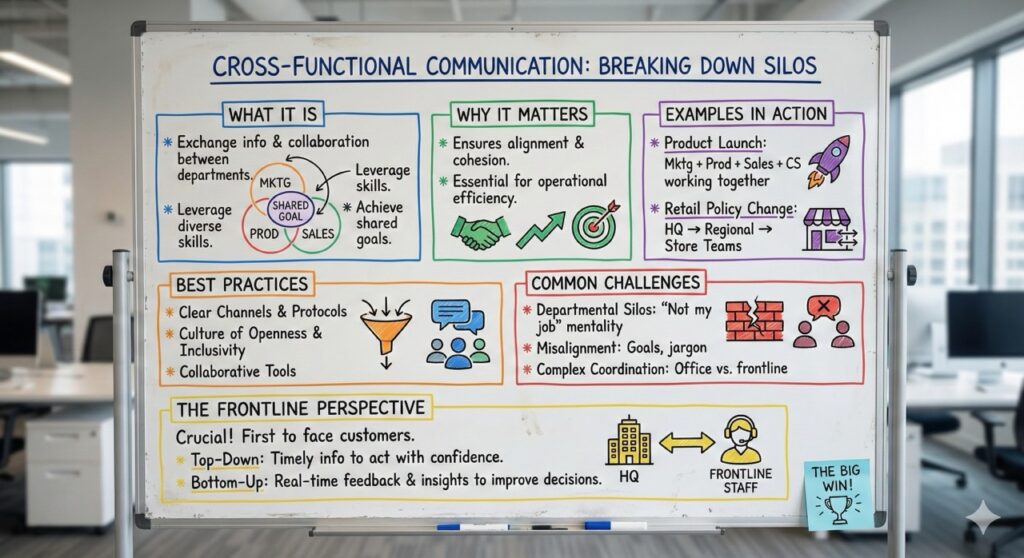
Cross-Functional Communication refers to the exchange of information and collaboration between different departments, teams, or groups within an organisation that typically have varied functions and objectives. It aims to break down silos, enhance collaboration, and foster a more integrated approach to achieving organisational goals. Effective cross-functional communication is essential for leveraging diverse perspectives, skills, and expertise to solve complex problems and innovate.
Why is Cross-Functional Communication relevant to internal comms?
Cross-Functional Communication is highly relevant to internal comms professionals because it directly impacts an organisation’s ability to operate cohesively and efficiently. By facilitating clear and open communication across different functions, internal comms can help ensure that all parts of the organisation are aligned with common objectives, understand each other’s roles and challenges, and work together effectively towards shared goals.
Examples of Cross-Functional Communication in internal comms
A common example includes a project team composed of members from the marketing, product development, sales, and customer service departments working together on a product launch. Effective cross-functional communication in this context would involve regular update meetings, shared project documentation, and a common communication platform for exchanging ideas and progress updates.
Another practical example is a retail organisation coordinating between head office, regional management, and store teams during a major policy change. Instead of relying on a cascade of emails and meetings, successful organisations use targeted communication to ensure every team receives role-specific information. Store managers get implementation guidance, regional teams get oversight dashboards, and frontline staff get clear, actionable instructions about what changes on the shop floor.
Best practices for Cross-Functional Communication
- Establish clear communication channels and protocols that facilitate easy information exchange across teams. This means creating dedicated pathways for different types of communication, whether urgent operational updates or routine project check-ins, so teams know where to look and who to contact.
- Encourage a culture of openness and inclusivity where diverse perspectives are valued and sought after. Research from Harvard Business Review shows that teams with psychological safety and inclusive practices are more likely to share critical information across functional boundaries.
- Use collaborative tools and platforms that support real-time communication and information sharing. The right technology removes friction from daily interactions and ensures information flows to the people who need it most.
Common challenges for Cross-Functional Communication
- Overcoming departmental silos and the “not my job” mentality that can develop when teams operate in isolation
- Aligning differing departmental goals, languages, and work cultures. McKinsey research highlights that misalignment between departments is one of the most significant barriers to organisational agility
- Managing the complexity of coordinating communication across multiple teams, particularly when some teams are office-based whilst others work on the frontline without regular access to email or desktop systems
What does Cross-Functional Communication mean for frontline teams?
For frontline teams, effective Cross-Functional Communication ensures they receive timely and relevant information from various parts of the organisation, enabling them to serve customers more effectively and contribute to broader organisational initiatives.
Frontline workers are often the last to hear about changes yet the first to face questions from customers. When communication flows smoothly between head office, operations, marketing, and the frontline, teams can act with confidence rather than guessing. They know about promotional changes before customers ask, understand policy updates before implementing them, and can share real-time feedback that helps other departments make better decisions.
It also allows frontline teams to share valuable insights with other departments, fostering a deeper understanding of customer needs and operational challenges. This two-way flow of information breaks down the traditional hierarchy where knowledge only flows downward, creating a more responsive and agile organisation.

Cross-Functional Communication FAQs
- How can technology support Cross-Functional Communication?
- Technology, such as project management software and collaboration platforms, can facilitate seamless communication across teams, allowing for shared workspaces and streamlined information exchange.
- What role do leaders play in fostering Cross-Functional Communication?
- Leaders are crucial in modelling cross-functional collaboration, setting expectations for open communication, and removing barriers that hinder interdepartmental exchange.
- How can Cross-Functional Communication impact organisational success?
- By promoting synergy across different functions, it can lead to more innovative solutions, faster problem-solving, and a more agile response to market changes.
See how Ocasta improves cross-functional communication
Book a demo to see how frontline teams use Ocasta to break down silos and improve performance across departments.