
Daily Housekeeping Checklist
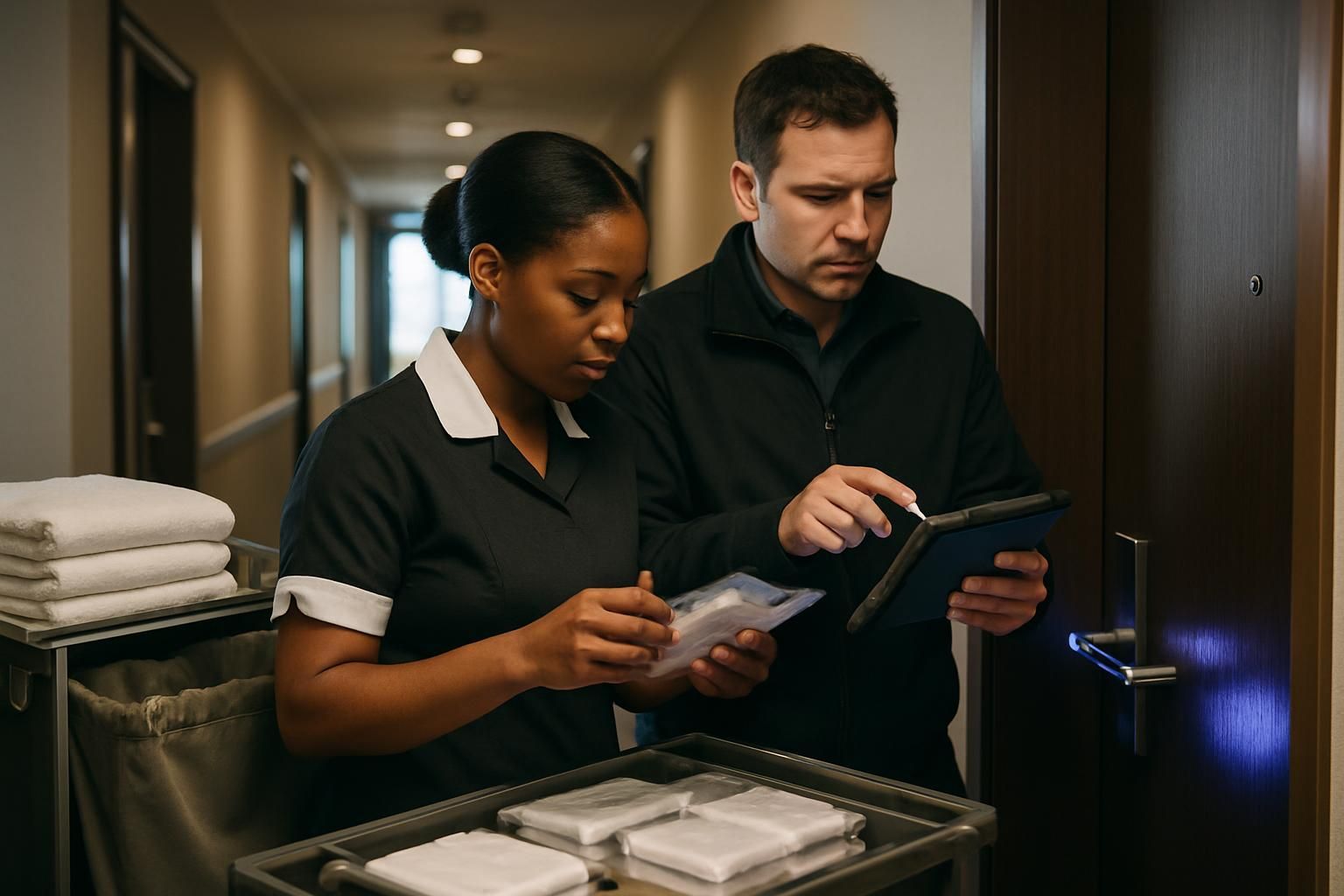
Download your daily housekeeping checklist
Please fill out the form below to access your free daily housekeeping checklist download.
About this daily housekeeping checklist
Housekeeping is one of those jobs that looks “fine” right up until it isn’t. A missed spill, an empty soap dispenser, or a blocked walkway can turn into complaints, incidents, and wasted time. This daily housekeeping checklist gives your team a clear standard to follow — with preparation checks, in-process checks, escalation criteria, and close-out actions.
Use it at the start of shift, during trading, and at close. The goal is simple: stop guessing, start knowing what’s been checked, what’s been fixed, and what needs support.
What this daily housekeeping checklist covers
- Preparation and safety checks (PPE, signage, chemicals, equipment, supplies)
- In-process housekeeping checks (high-touch points, floors, washrooms, waste, spill response)
- Clear escalation criteria (when to stop and raise a risk)
- Close-out and handover actions (reset, store, document, sign off)
Who it’s for
This checklist works well for operations teams in retail, hospitality, and transport and logistics — anywhere you need consistent standards across shifts and sites, without relying on memory or “how we do it here”.
How to use it (without slowing the shift down)
- Start with preparation: if supplies or equipment are missing, you’ll chase your tail all day.
- Check little and often: quick in-process checks prevent end-of-day panic cleaning.
- Escalate early: if it’s a safety risk or you can’t restore standard quickly, log it and raise it.
- Close out properly: clean and store kit, remove signage when safe, and leave a clear handover note.
Common escalation triggers (use these to remove guesswork)
Escalate when any of the following are true:
- There’s an immediate safety risk (for example, sharps, bodily fluids, broken glass, electrical hazards, blocked fire routes).
- You’re repeatedly failing the same standard (for example, washrooms not staying stocked, bins overflowing, persistent odours).
- You lack time, people, equipment, or supplies to bring the area back to standard during the shift.
- A maintenance or facilities issue is preventing cleaning (for example, leaks, broken dispensers, damaged flooring).
Want this checklist to run itself?
Ocasta replaces paper checklists with digital checks your team can complete on any device — with clear standards, evidence capture, and real-time visibility for managers. No more chasing updates or discovering problems after the fact.
Disclaimer: This checklist is for general guidance only and does not constitute legal, regulatory, health and safety, or professional advice. You are responsible for ensuring compliance with applicable laws, standards, and internal policies.
Included questions
Here's what's included in this daily housekeeping checklist:
Preparation and safety checks (7)
Start the shift with the basics: hazards, supplies, and clarity on priorities. This prevents rework and missed standards later.
-
Yes/No
Site, date, and shift details confirmed
Confirm location, shift name, and who is responsible for sign-off today.
-
Yes/No
PPE available and worn where required
Include gloves, eye protection, apron, safety footwear, and any site-specific PPE.
-
Yes/No
Wet floor signs and barriers available
Check you have enough signage before starting any wet cleaning.
-
Yes/No
Cleaning chemicals labelled and in date
No unlabelled bottles. Check dilution guidance is available and followed.
-
Yes/No
Cleaning equipment clean and working
Mops, buckets, vacuum, scrubber, cloths, and brushes. Remove any damaged items from use.
-
Dropdown
Supplies stocked for the shift
Include bin liners, paper products, sanitiser, cloths, and spare consumables.
-
Text
Priority areas identified for today
What must be spotless today (e.g. front-of-house, washrooms, high-traffic routes, customer touchpoints)?
In-process housekeeping checks (9)
Keep standards consistent during the shift. Focus on high-touch points, waste, washrooms, and spill response.
-
Yes/No
High-touch points cleaned and sanitised
Handles, rails, switches, counters, card machines, shared devices, door plates, and staff touchpoints.
-
Yes/No
Floors kept clear and safe
No trip hazards, trailing cables, or blocked walkways. Wet cleaning clearly signed and controlled.
-
Dropdown
Spills managed within the agreed response time
Record any spill that took longer than expected and why.
-
Text
Spill response notes (if applicable)
Location, time, cause (if known), and any follow-up needed to prevent repeat issues.
-
Yes/No
Bins emptied and liners replaced
Include public areas, back-of-house, and staff areas. No overflow or odours.
-
Dropdown
Waste segregation followed
Check general waste, recycling, and any site-specific streams are correctly separated.
-
Dropdown
Washrooms clean and stocked
Toilets, sinks, mirrors, floors, baby change (if present), and odour control. Refill soap, paper, and sanitiser.
-
Yes/No
Back-of-house kept tidy and hygienic
Storage areas, cleaning cupboard, staff room, and waste holding area. No build-up, leaks, or blocked access.
-
Yes/No
Cleaning tools separated by use
Avoid cross-contamination (e.g. washroom tools not used in other areas). Follow colour-coding if used on site.
Issues and escalation criteria (6)
Stop guessing. Escalate when there’s a safety risk, repeated failure, or you cannot restore standard quickly.
-
Yes/No
Any immediate safety risks identified
Examples: exposed sharps, bodily fluids, broken glass, strong chemical smell, electrical hazard, blocked fire route.
-
Text
Actions taken for safety risks (if any)
What was isolated, what signage was used, and who was informed.
-
Dropdown
Any area unable to meet housekeeping standard today
If yes, capture what, why, and the next step.
-
Text
Areas below standard (details)
List the area(s), what ‘good’ looks like, what’s missing, and the impact (safety, customer experience, compliance).
-
Dropdown
Escalation required
Escalate if there’s a safety risk, repeated issue, or you need support to restore standard.
-
Text
Escalation reference or ticket ID
Add any job number, email subject, or reference used to track the issue.
Close-out and handover (7)
Finish strong: reset the site, clean the kit, and leave clear notes so the next shift doesn’t inherit unknowns.
-
Yes/No
Final walkthrough completed
Check entrances, high-traffic routes, washrooms, staff areas, and waste points.
-
Yes/No
All signage removed when safe
Only remove wet floor signs once the area is dry and safe.
-
Yes/No
Cleaning equipment cleaned and stored
Rinse buckets, launder cloths, empty vacuum, charge equipment (if applicable), and store safely.
-
Yes/No
Chemicals stored securely
Locked cupboard where required. No decanted/unknown liquids left behind.
-
Yes/No
Waste removed to the designated area
No bags left in public areas or blocking back-of-house routes.
-
Text
Handover notes logged
What was completed, what wasn’t, and what the next shift must prioritise. Include any open escalations.
-
Signature
Shift sign-off
Sign to confirm today’s daily housekeeping checks are complete and issues are recorded.