
Gym Floor Engagement Observation
Download your gym floor observation
Please fill out the form below to access your free gym floor observation download.
About this gym floor observation
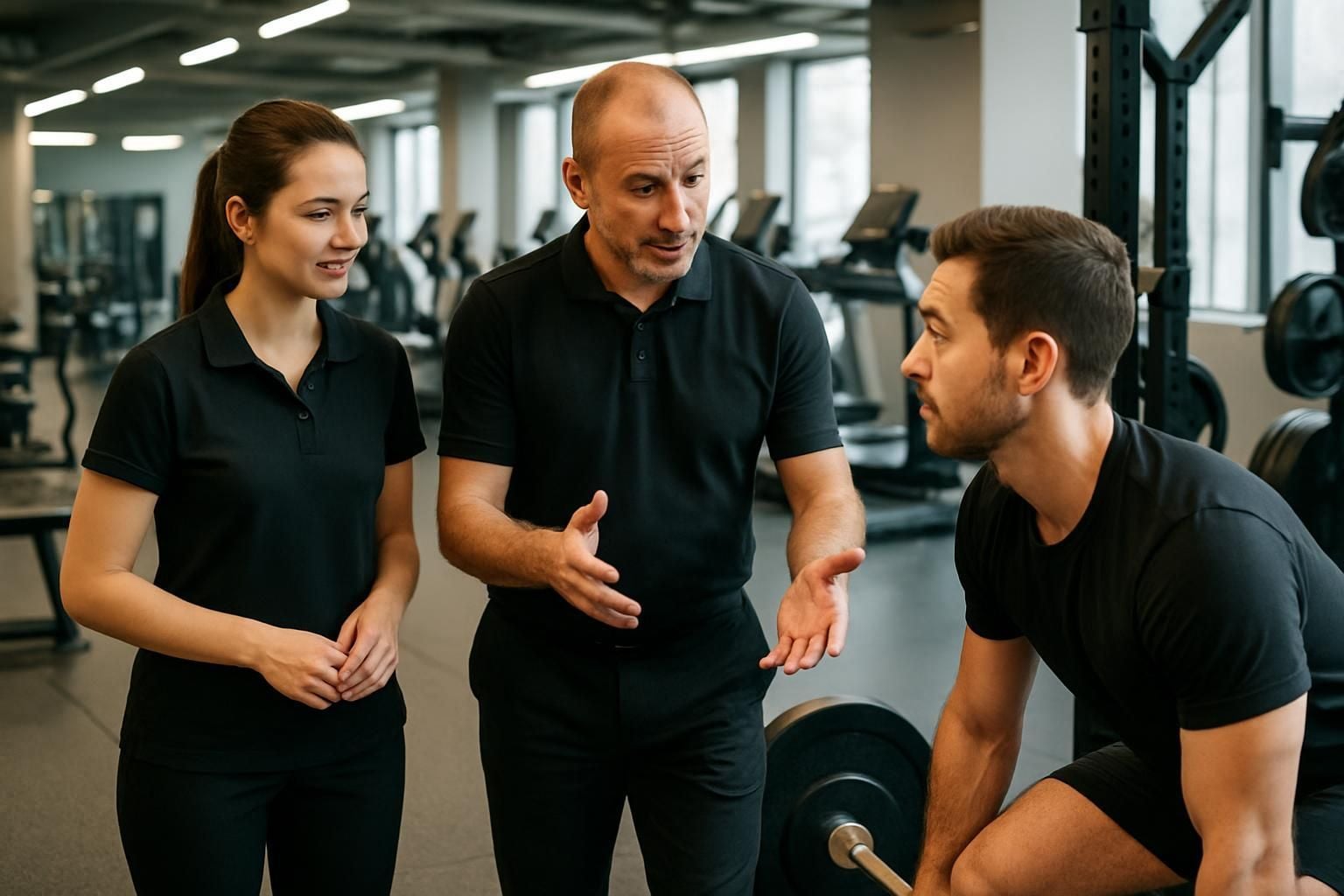
When the gym floor gets busy, it is easy for support to become reactive — members only get help when they ask, something goes wrong, or a complaint lands later. This gym floor engagement observation gives managers a simple way to spot what is really happening in the moment: are staff visible, proactive, safe, and turning quick interactions into clear outcomes?
Use it to coach consistent behaviours that improve retention and reduce risk — without relying on guesswork.
What this observation covers
- Visibility and approachability — are staff present on the floor, scanning, and easy to approach?
- Proactive member engagement — are they checking in at the right moments, not interrupting?
- Technique support and coaching quality — are cues specific, safe, and understood?
- Safety, overcrowding and behaviour management — do they intervene calmly and keep shared spaces safe?
- Outcomes and follow-through — do interactions lead to measurable next steps (programme updates, PT taster bookings, risk removed)?
Who it is for
This guide works best for operations teams and gym managers who want a consistent way to coach floor behaviours across shifts and locations. It is also useful for L&D teams who want real evidence of coaching quality — not just completion of training.
How to run a gym floor engagement observation
- Pick a realistic window (10–20 minutes) and note footfall level and zone. Context matters.
- Watch for patterns, not one-off moments. Look for repeated scanning, proactive check-ins, and safe interventions.
- Capture specific examples of what was said and done. Avoid vague feedback like “be more engaging”.
- Coach one priority behaviour that will change outcomes fastest (for example: moving through higher-risk zones during peak periods).
- Agree a next action with a timeframe, and define what ‘done’ looks like.
What good looks like (and what to coach)
Good looks like visible staff presence, well-timed engagement, and coaching that is specific enough to change behaviour immediately. You should see members repeat the corrected movement safely, accept a clear next step, or leave the interaction more confident than before.
Coach when staff stay in low-impact areas, wait to be approached, give generic cues (“keep your back straight”), or avoid intervening in overcrowded zones. These are the moments where risk and churn quietly build.
Turn observations into consistent performance with Ocasta
Paper notes and informal feedback make it hard to see whether coaching is working across the week — and across sites. Ocasta replaces that with structured observations, consistent scoring, and clear actions, so you can stop guessing and start knowing what is happening on the gym floor.
Disclaimer: This checklist is for general guidance only and does not constitute legal, regulatory, health and safety, or professional advice. You are responsible for ensuring compliance with applicable laws, standards, and internal policies.
Included questions
Here's what's included in this gym floor observation:
Set-up and context (5)
Capture the basics so coaching is fair and comparable across shifts and sites.
-
Text
Date and time of observation
Include start and finish time if possible.
-
Dropdown
Gym zone observed
Choose the main area where the observation took place.
-
Dropdown
Footfall level during observation
This helps explain what ‘good’ looks like in the moment.
-
Person
Team member observed
Select the staff member being observed.
-
Person
Observer
Who completed this observation?
Visibility and approachability (5)
Members should feel supported without needing to chase help.
-
Yes/No
Was the team member visibly present on the gym floor (not hidden behind a desk or phone)?
Look for active floor presence: moving through zones, scanning, and being available.
-
Vibe
How approachable did they seem?
Consider eye contact, open posture, and whether members looked comfortable approaching them.
-
Vibe
How proactive were they in engaging members (without interrupting workouts)?
Look for timely, relevant check-ins rather than waiting to be asked.
-
Number
Number of proactive member interactions observed
Count brief check-ins, technique support, and safety interventions initiated by the team member.
-
Yes/No
Did they use member-first language (friendly, respectful, non-judgemental)?
For example: ‘How’s that set feeling?’ rather than ‘You’re doing that wrong.’
Technique support and coaching quality (5)
Great coaching is specific, safe, and leaves the member clearer than before.
-
Yes/No
Did they notice and act on technique risks (unsafe form, poor setup, inappropriate load)?
Only count if they intervened appropriately — not just noticing.
-
Vibe
How specific was the coaching given?
Specific beats generic: clear cues, one or two changes, and a reason (‘to protect your shoulders’).
-
Yes/No
Did they check the member understood (and could repeat the change)?
For example: asking the member to try again and confirming what changed.
-
Yes/No
Did they coach professionally and respect personal space and consent?
If any physical demonstration or adjustment is required, consent should be clear.
-
Yes/No
Did they offer programme support (progression, regression, alternatives) when appropriate?
Look for practical next steps, not just ‘good job’.
Safety, overcrowding and behaviour management (5)
When the gym is busy, the standard should not drop — it should become more intentional.
-
Yes/No
Did they identify overcrowded or higher-risk areas and spend time there?
Examples: free weights at peak time, busy cable stations, congested walkways.
-
Vibe
How well did they manage equipment etiquette and shared space?
Examples: re-racking, wiping down, trip hazards, members waiting for kit, safe walkways.
-
Vibe
How effectively did they handle unsafe behaviour?
Look for calm, confident intervention and clear explanation of the ‘why’.
-
Yes/No
Did they escalate appropriately when needed (incident, refusal, injury risk)?
Only answer ‘Yes’ if escalation was required and handled correctly.
-
Vibe
How welcoming and inclusive was the environment they created?
Consider new members, nervous members, and those who may need extra reassurance.
Outcomes and follow-through (4)
If an interaction is useful, it should lead somewhere — clarity, confidence, or a next step.
-
Dropdown
What outcomes came from the interactions observed?
Choose the closest match (or ‘None observed’).
-
Number
Number of interactions that led to a clear outcome
An outcome is a clear next step or measurable change, not just a chat.
-
Yes/No
Where relevant, did they capture what’s needed to follow up (name, goal, next step)?
Only where appropriate and in line with your process.
-
Yes/No
Did they set a clear next action for the member (and confirm it)?
For example: ‘I’ll check in next week’ or ‘Let’s book you in for a taster’ — with a time or trigger.
Evidence and coaching notes (5)
Make feedback concrete. Capture what happened, then coach the next best step.
-
Text
What went well (specific examples)
Write what you saw and heard. Keep it factual and specific.
-
Text
Even better if (one or two coaching points)
Focus on the single biggest improvement that will change outcomes on the gym floor.
-
Text
Agreed actions and by when
Make it measurable (what, when, and how you’ll know it’s done).
-
Signature
Team member signature
Confirms the feedback conversation happened.
-
Signature
Observer signature
Confirms the observation was completed accurately.