
Luxury Performance Review Evidence Checklist
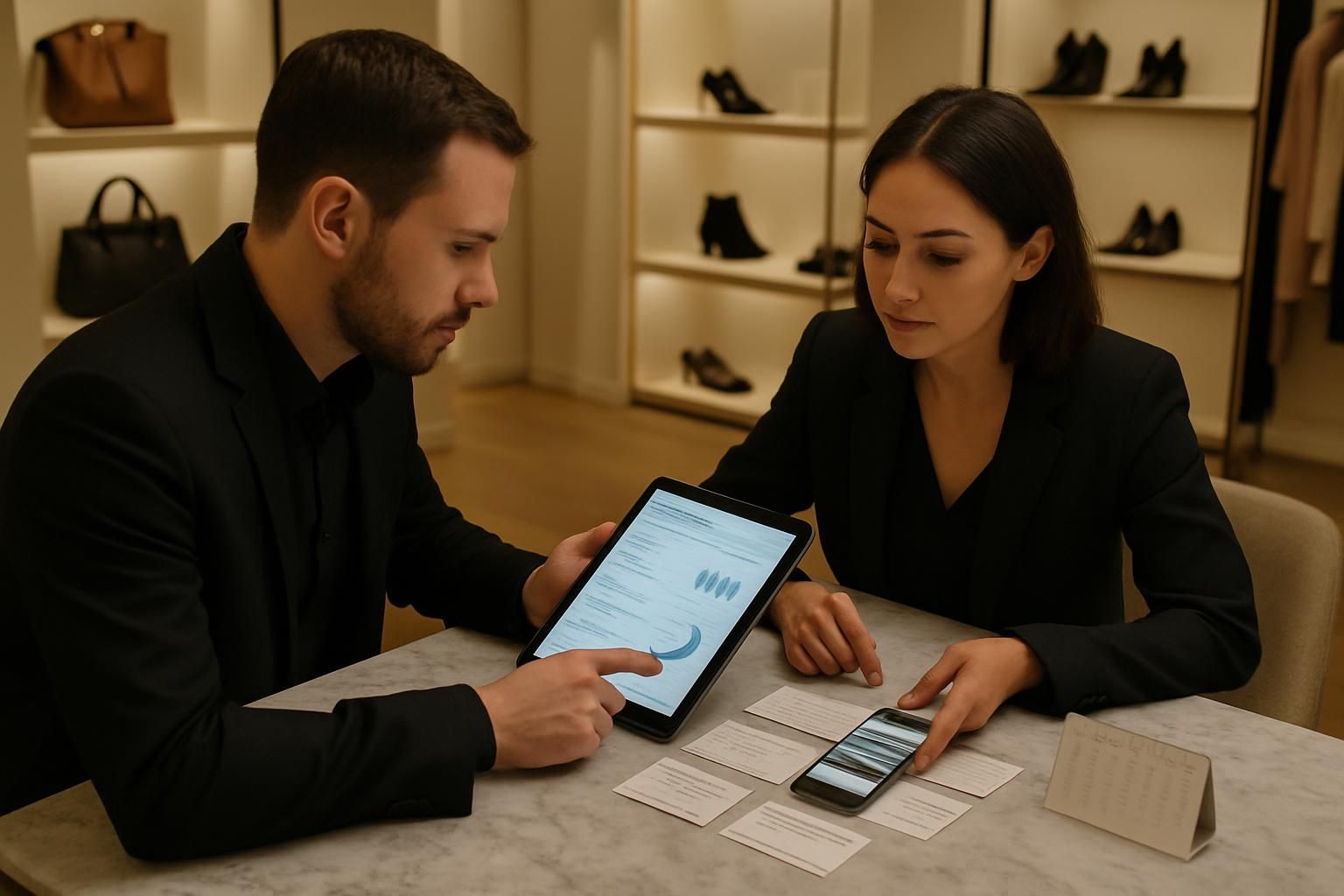
Download your performance review checklist
Please fill out the form below to access your free performance review checklist download.
About this performance review checklist
Performance reviews in luxury retail fall apart when we rely on memory, gut feel, or the last few weeks. This luxury performance review evidence checklist gives operations teams a simple way to gather balanced, specific evidence — sales results, service behaviours, and standards compliance — so reviews feel fair and lead to real development.
Use it before the conversation to stop guessing and start knowing: what actually happened, what great looked like, and what needs to change next.
What this checklist covers
This checklist guides managers to capture evidence across the full review period, including:
- Sales performance with context (not just totals)
- Service behaviours with specific on-floor examples
- Luxury standards and compliance evidence from checks and audits
- Client feedback from more than one source
- Peer collaboration and team impact
- Bias and fairness checks to reduce recency and halo effects
- Clear goals and development actions with follow-up dates
Who it is for
Store managers, assistant managers, and operations leaders who need consistent performance evidence across stores — especially where brand standards and service expectations are non-negotiable.
How to use it in the real world
- Start with the period and role scope so you are comparing like with like.
- Capture 2–3 specific examples for sales, service, and standards. If you cannot name the moment, you probably do not have evidence yet.
- Pull in at least two sources (for example: KPIs plus client feedback, or standards checks plus service examples).
- Write actions that can be coached — behaviours to repeat, behaviours to change, and what ‘good’ looks like.
- Book the follow-up before you close the review. A plan without a date is just good intentions.
Why it improves fairness and consistency
Great reviews are evidence-led. This checklist reduces bias by forcing a balanced view across outcomes and behaviours, across the whole period, and across multiple sources. It also makes standards measurable and coachable, so the review becomes a practical development plan — not a one-off conversation.
Turn evidence into action with Ocasta
Ocasta replaces scattered notes and inconsistent store processes with structured checklists, clear actions, and visibility for operations teams. When evidence is captured in the flow of work, managers spend less time chasing information and more time coaching the moments that change performance.
Disclaimer: This checklist is for general guidance only and does not constitute legal, regulatory, health and safety, or professional advice. You are responsible for ensuring compliance with applicable laws, standards, and internal policies.
Included questions
Here's what's included in this performance review checklist:
Review details and scope (6)
Set clear boundaries for the review period and role expectations so the evidence is fair and comparable.
-
Text
Review period start date
Use the agreed review cycle dates (for example, quarterly or biannual).
-
Text
Review period end date
If the colleague changed role mid-period, note the effective date in the comments later.
-
Person
Colleague being reviewed
Select the colleague this evidence pack relates to.
-
Person
Reviewer
Who is accountable for the final review write-up?
-
Text
Role title and level
For example: Sales Associate, Senior Sales Associate, Supervisor.
-
Text
Store location
Include store name and city (or store number).
Sales performance evidence (5)
Capture outcomes and the context behind them — not just totals. Aim for at least 2–3 specific examples.
-
Yes/No
Have you recorded the key sales KPIs for the period?
Include the KPIs you use locally (for example: revenue, conversion, ATV, UPT, clienteling activity).
-
Yes/No
Have you noted the context that affected results?
For example: rota changes, footfall shifts, stock constraints, events, new product launches, time off.
-
Text
Specific sales win example
Write one clear example: situation, what they did, what happened, and the outcome (include numbers if available).
-
Text
Specific missed opportunity example
Keep it factual and fair. What was missed, what would ‘great’ have looked like, and what you want repeated or changed next time.
-
Dropdown
Overall progress against sales goals
Choose the option that best matches the evidence you have.
Service behaviours and luxury standards (5)
Balance ‘what’ happened with ‘how’ it happened. Use concrete examples from real moments on the floor.
-
Dropdown
How many specific service behaviour examples have you captured?
Aim for at least 3 examples across different days or situations.
-
Text
Service example: client experience moment
Describe the moment and behaviour: greeting, discovery, storytelling, product handling, closing, aftercare, and tone.
-
Text
Service recovery example (if applicable)
If there was an issue, how did they handle it? Focus on ownership, calmness, and resolution quality.
-
Yes/No
Is there evidence of clienteling and follow-up activity?
For example: appointment setting, outreach, aftercare messages, repeat client engagement (avoid personal data where not permitted).
-
Dropdown
Adherence to luxury brand standards
Base this on consistent behaviour across the period, not one standout day.
Compliance and operational standards evidence (5)
Capture evidence that protects the brand: process discipline, cash and stock controls, and visual standards.
-
Dropdown
Which sources did you use for standards evidence?
Select the closest match based on what you actually reviewed.
-
Yes/No
Were there any compliance or standards breaches in the period?
If yes, document what happened, impact, and corrective action taken (keep it factual).
-
Text
Compliance or standards breach details
Include date, what standard was missed, what was done to fix it, and what will prevent repeat.
-
Text
Visual and presentation standards example
One specific example of great execution or a gap (for example: replenishment, folding, fixtures, back-of-house discipline).
-
Dropdown
Consistency of operational standards
Choose the option that best reflects the evidence across the full period.
Client feedback and reputation evidence (4)
Use a mix of formal feedback and real client comments. Aim for evidence from more than one source.
-
Dropdown
Client feedback sources used
Pick the option that best matches your evidence.
-
Text
Positive client feedback example
Quote or summarise the feedback and note the date/source. Avoid personal data unless you have permission and policy allows it.
-
Text
Constructive client feedback example (if any)
What was the feedback, what was learned, and what changed afterwards?
-
Yes/No
Is the feedback evidence balanced (not just best or worst moments)?
If the evidence is skewed, add at least one more example before finalising.
Peer collaboration and team impact (4)
Performance in luxury retail is never solo. Capture how they raise standards around them.
-
Yes/No
Have you captured at least two collaboration examples?
Examples: covering peak periods, sharing product knowledge, supporting new starters, calm handovers.
-
Text
Collaboration example
Describe what they did, who it impacted, and the outcome for the store or client experience.
-
Text
Peer feedback summary
Summarise feedback from at least one peer or supervisor. Keep it specific and behaviour-based.
-
Dropdown
Alignment with team values and behaviours
Base this on repeated behaviour, not one-off impressions.
Bias and fairness checks (4)
Reduce guesswork and bias by checking your evidence quality before the conversation.
-
Yes/No
Does your evidence cover the whole review period (not just recent weeks)?
Recency bias is common. Add earlier examples if needed.
-
Yes/No
Is your evidence from at least two sources?
For example: KPI data plus client feedback, or checklist evidence plus direct examples.
-
Dropdown
What standard are you comparing against?
Choose the fairest reference point for the role and level.
-
Yes/No
Is your draft wording behaviour-based (not personality-based)?
Swap labels like ‘lazy’ or ‘difficult’ for observable actions and impact.
Goals, development actions, and follow-up (6)
Turn the review into a practical plan with clear actions, owners, and dates.
-
Text
Top strengths to reinforce (up to 3)
Tie each strength to a specific example already captured above.
-
Text
Development focus area
One priority area that will make the biggest difference over the next period.
-
Text
Development actions and support
List actions, who owns them (colleague/manager), and what ‘good’ looks like in practice.
-
Text
Next period goals
Write 2–4 goals that are clear and measurable. Include service and standards goals, not just sales.
-
Yes/No
Is a follow-up date booked?
Set a date for a mid-cycle check-in to avoid one-off reviews.
-
Text
Follow-up date
Add the date and what you will review at that check-in.
Sign-off (2)
Confirm the evidence pack is complete and ready for the performance conversation.
-
Signature
Manager sign-off
Signing confirms the evidence is accurate, balanced, and recorded in line with policy.
-
Text
Notes for the review conversation
Keep it simple: key messages, questions to ask, and any support needed from HR or senior leaders.