
Operational Excellence Checklist
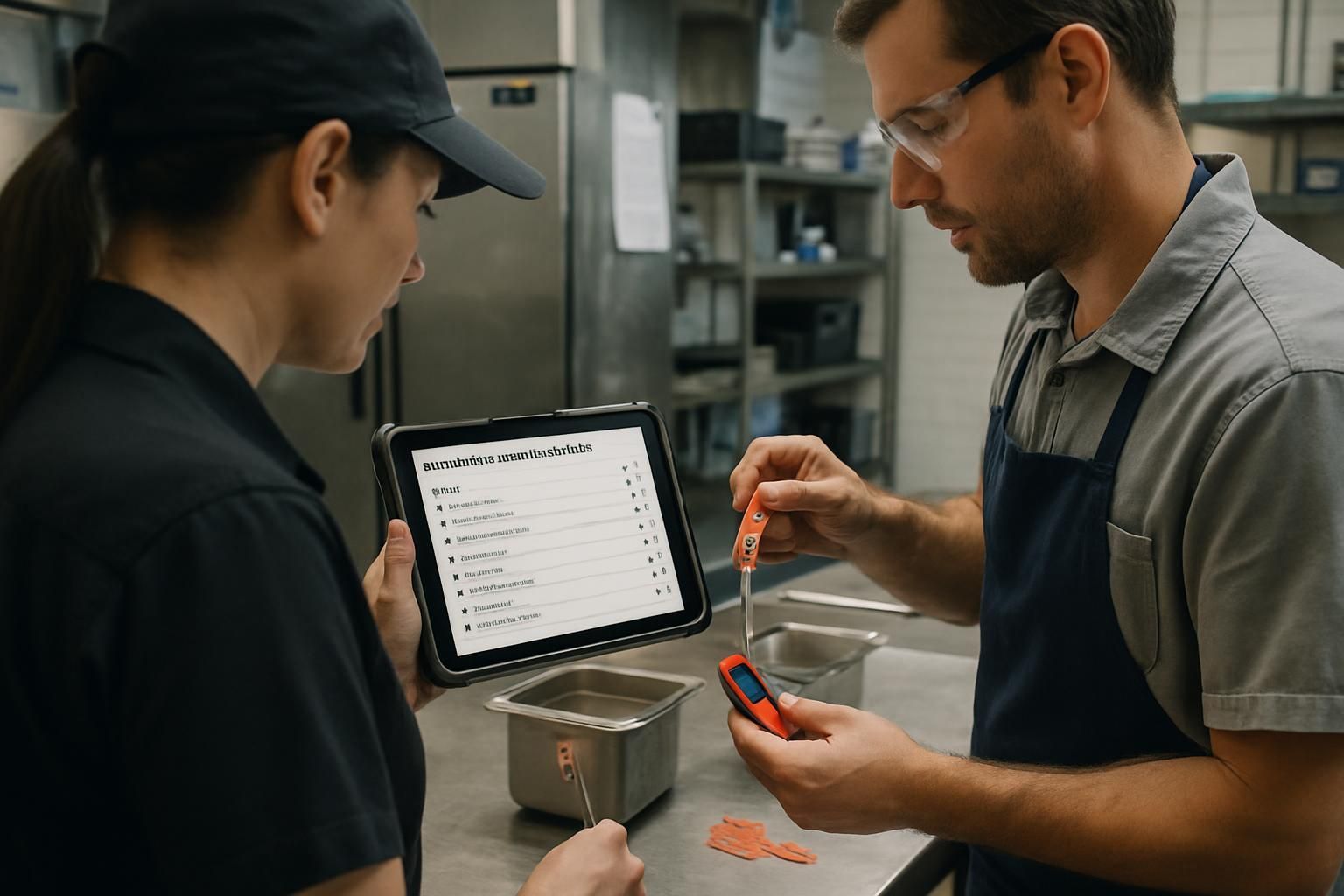
Download your operational excellence checklist
Please fill out the form below to access your free operational excellence checklist download.
About this operational excellence checklist
Operational excellence is what happens when the basics are done well, every time — even when it’s busy, short-staffed, or something breaks. This operational excellence checklist gives Operations Teams a practical way to verify readiness, keep standards on track during the shift, escalate issues early, and close out with clear actions.
If you’re relying on memory, manager relay, or “we usually do it this way”, you’re forced to guess. This checklist replaces guesswork with consistent checks and a simple record of what happened, what changed, and what needs attention next.
What this operational excellence checklist covers
Use it daily or per shift to keep performance consistent across people, sites, and peak periods. It includes:
- Preparation checks to confirm staffing, safety, systems, and priorities
- In-process checks to spot drift in service, quality, and safety while work is happening
- Escalation criteria so teams know when to pause, raise risk, and ask for support
- Close-out actions to lock in standards, complete handovers, and capture improvement
When to use it
This checklist works best when you run it at consistent moments:
- Start of shift (readiness and priorities)
- Mid-shift (in-process controls and early escalation)
- End of shift (close-out, handover, and actions)
How to get value from it (not just tick boxes)
Operational excellence isn’t paperwork. It’s clarity and follow-through. To make the checklist pay for itself:
- Keep answers evidence-based (what you saw, measured, or verified)
- Turn issues into actions (owner + due date, every time)
- Escalate early when risk is rising — before service fails or rework piles up
- Use the close-out to reduce tomorrow’s unknowns, not just to “finish the form”
Common escalation triggers to include
If you want a simple rule: escalate when the team can’t fix it safely, quickly, or within agreed limits. Typical triggers include safety risks, critical system outages, severe staffing gaps, repeated quality failures, or anything that forces you to pause work.
Want to stop guessing across every site?
Ocasta turns frontline checks into real-time knowledge: teams know what’s changing and what matters, and leaders get visibility into standards, risks, and trends without chasing updates.
Disclaimer: This checklist is for general guidance only and does not constitute legal, regulatory, health and safety, or professional advice. You are responsible for ensuring compliance with applicable laws, standards, and internal policies.
Included questions
Here's what's included in this operational excellence checklist:
Preparation and shift readiness (7)
Start the shift with clear priorities, the right resources, and no avoidable unknowns.
-
Yes/No
Has the shift brief been completed and understood by the team?
Confirm today’s priorities, risks, and what “good” looks like. Capture any blockers raised.
-
Yes/No
Is staffing in place versus the plan for this shift?
If short-staffed, confirm the mitigation (reallocation, reduced scope, or escalation).
-
Dropdown
Are critical roles covered and assigned?
Examples: keyholder, first aider, fire marshal, shift lead, cash office, closing lead.
-
Yes/No
Is the site safe and accessible (entry, exits, walkways, lighting)?
Remove trip hazards, confirm emergency exits are clear, and report any unsafe conditions.
-
Dropdown
Are critical systems and equipment working?
Include any tools needed to operate (e.g. tills, scanners, printers, radios, tablets).
-
Dropdown
Are key stock items and consumables available for today’s demand?
Focus on high-impact items that create service failures when missing.
-
Text
What are the top three measures of success for today?
Keep it specific and operational (e.g. queue time, on-shelf availability, dispatch cut-off, cleanliness standard).
In-process operational controls (7)
Keep standards consistent while work is happening — not just at the start and end.
-
Dropdown
Are service levels on track right now?
Use your local definition of service level (e.g. wait time, response time, throughput, SLA).
-
Yes/No
Have scheduled quality checks been completed on time?
Examples: product checks, job checks, paperwork checks, spot checks, sampling.
-
Dropdown
Are safety controls being followed consistently?
Include PPE, manual handling, equipment use, restricted areas, and safe systems of work.
-
Yes/No
Is the team prioritising the highest-value tasks for the current demand?
If demand spikes, confirm what gets paused and what must continue.
-
Vibe
Overall standards right now
Gut check: if a senior leader walked in now, would you be confident in what they’d see?
-
Yes/No
Are issues being logged with an owner and due date (not just reported)?
Operational excellence is follow-through: every issue should have a next step.
-
Text
What feedback have you received today (positive or negative)?
Capture themes and examples. If negative, note what changed as a result.
Escalation criteria and exception handling (5)
Know when to stop guessing and escalate — quickly, clearly, and with the right detail.
-
Dropdown
Has an escalation been triggered today?
Choose the highest severity that applies.
-
Dropdown
If escalated, what was the reason?
Select the primary reason. Add detail in the next question.
-
Text
Escalation details: impact, actions taken, and what support is needed
Include: what happened, when, who is affected, what you’ve already tried, and the decision required.
-
Yes/No
Was any work paused to prevent harm, waste, or rework?
If yes, note what was stopped and the condition for restart.
-
Person
Who owns the escalation until it is resolved?
Assign a single accountable owner. Shared ownership often means no ownership.
Close-out and continuous improvement (8)
Finish strong: confirm standards, close actions, and capture learning for tomorrow.
-
Dropdown
At close-out, are standards met across the operation?
Use your local standards: cleanliness, readiness, accuracy, safety, presentation, documentation.
-
Yes/No
Have all critical tasks been completed (or formally deferred with approval)?
If deferred, note who approved and when it will be completed.
-
Yes/No
Has a clear handover been completed to the next shift or manager?
Include: what changed, what’s still open, and what to watch first.
-
Number
How many actions are still open at close-out?
Count actions that have an owner and due date but are not yet complete.
-
Text
List the top three open actions with owner and due date
Keep it practical. If it’s not actionable, rewrite it until it is.
-
Text
What should we repeat next shift because it worked well?
Operational excellence is consistency. Capture the behaviours that created a good outcome.
-
Text
What should we change next shift to remove friction or risk?
Focus on one change that reduces guesswork: clearer comms, better sequencing, better checks, better ownership.
-
Signature
Completed by
Sign to confirm this operational excellence checklist is accurate to the best of your knowledge.