
 ChatGPT
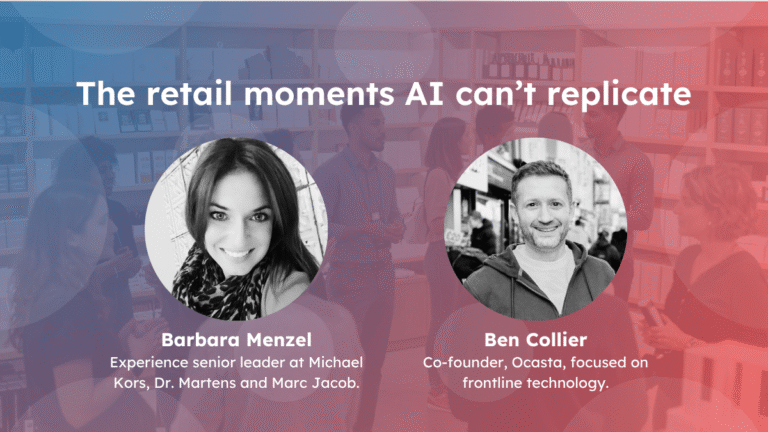
Ocasta co-founder Ben Collier joins Simon Hedaux on the Productivity Podcast to talk about frontline observations, coaching, customer behaviour and where AI can genuinely help store managers.
Retailers have no shortage of data. Conversion, average transaction value, customer satisfaction and sales per hour can all tell you how a store is performing.
The harder question is what to do when one of those numbers needs to move.
As Ben puts it in the episode: if you tell us the conversion rate, we know what happened. If you show us the behaviours behind it, we can start to understand what can actually be changed.
That idea sits at the heart of Ben’s conversation with Simon Hedaux from ReThink Productivity.
From mystery shopping to real customer moments
Mystery shopping has been part of retail for decades, but it has some fairly obvious limitations.
Visits are expensive, which means the sample size is usually small. Experienced store teams can often spot a mystery shopper, and you’re still looking at a single interaction from one point in time.
Customer surveys have a different blind spot: in most cases, somebody needs to have completed a transaction before you’re able to ask them about it.
That leaves a pretty important group of customers out of the picture — the ones who walked away without buying.
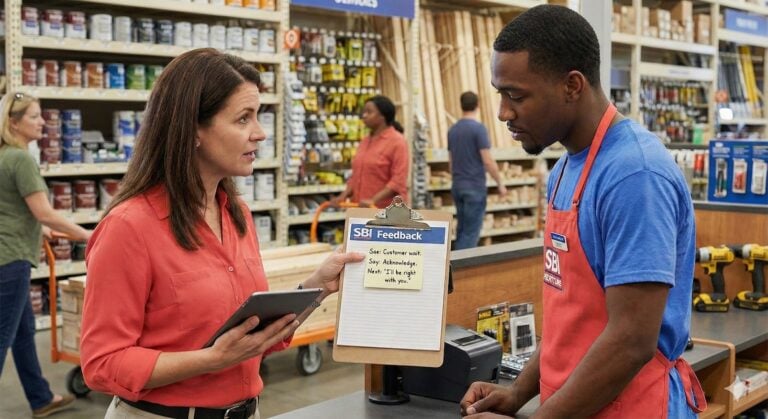
Ben and Simon discuss how regular colleague observations give retailers another source of insight. A manager can watch a genuine customer interaction and look at the behaviours that sit behind the eventual outcome.
Did the colleague uncover what the customer needed? Did they recommend the right product? Did they offer the relevant service? Did they actually ask for the sale?
Those are things you can coach.
Connecting behaviour to commercial performance
The episode also looks at why frontline productivity shouldn’t only be measured by how quickly work gets done.
Finding a more efficient process and saving a few minutes is valuable. But in a customer-facing environment, helping the same team create more value from the customer interactions they’re already having can have a significant impact too.
Ben shares an example from Victoria’s Secret, where offering customers a bra fitting is an important behaviour because customers who take up a fitting are much more likely to go on to buy.
Through regular observations, the proportion of customers being offered a fitting increased from around 86% to 96%.
It’s a useful example of moving beyond a dashboard metric and finding the frontline behaviour that actually influences it.
Observation is only the start
Recording whether a behaviour happened isn’t particularly useful if the information stops there.
The real value comes from what the manager does next.
Ben talks about seeing colleagues finish an observed customer interaction and immediately approach their manager to ask how they did and what they could improve. It surprised him at first, but it shows what observations can look like when they’re part of a normal coaching culture rather than something employees associate with being inspected.
That creates another challenge: store managers aren’t automatically great coaches.
They may have been promoted because they’re commercially strong, operationally capable and good with their team, without ever having been taught how to structure a useful coaching conversation.
So how do you give managers more support without taking the human judgement out of it?
Where AI fits into frontline coaching
That’s one of the areas we’re working on at Ocasta.
Our Coaching Assistant uses the results of an observation alongside the organisation’s expected behaviours and existing learning to help managers prepare the next conversation.
It can suggest questions to ask, areas worth discussing, possible actions and relevant learning for the colleague.
The important part is that it remains an assistant.
The manager was there. They know the colleague, understand the context and can judge how best to have the conversation. AI can sift through the information and give them a stronger starting point without trying to replace that judgement.
Ben and Simon also discuss the wider role of AI across frontline operations, from giving colleagues direct answers from company knowledge to quickly turning SOPs into short learning.
Throughout it all, the principle is much the same: use AI to help people make better decisions, rather than removing people from decisions where context and judgement still matter.
Listen to the episode
Listen to Ben Collier and Simon Hedaux discuss:
- why outcomes such as conversion only tell part of the story
- the limitations of mystery shopping and customer surveys
- how observations uncover coachable frontline behaviours
- connecting customer experience with commercial performance
- why store managers need better support to coach their teams
- how AI can assist coaching without replacing human judgement
- where frontline productivity goes beyond simply cutting costs
Listen to the Productivity Podcast now.
Continue the conversation at the Productivity Forum
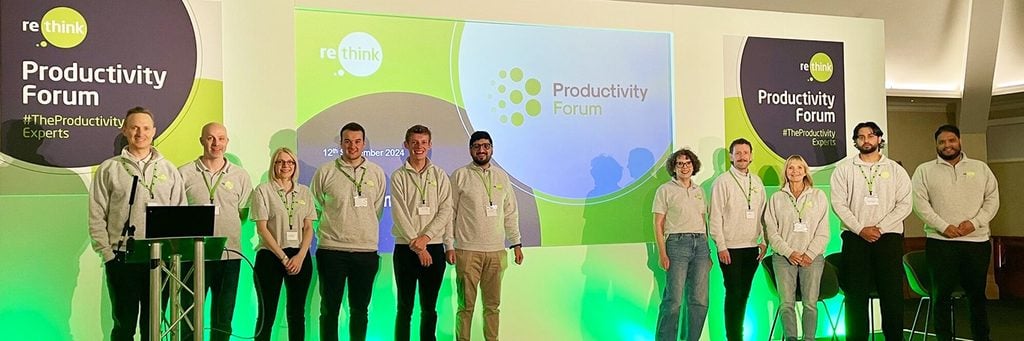
We’ll also be joining ReThink Productivity at the Productivity Forum in Birmingham on the 10th of September.
We’ll be showing an early look at Ocasta’s Coaching Assistant and talking to operations teams about how they’re currently approaching observations, coaching and frontline performance.
The event is free for operational teams.